 Honest take
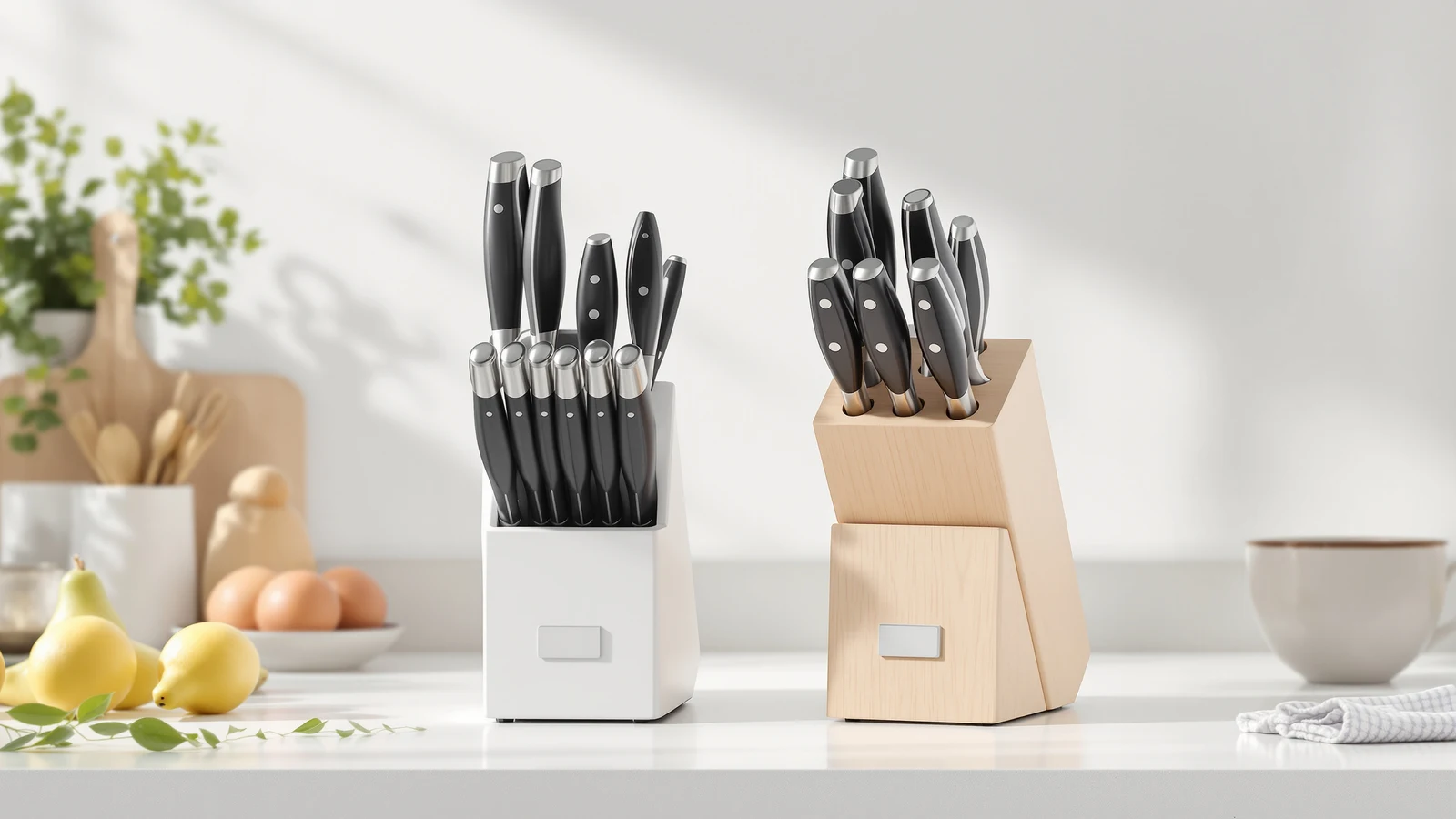
Umite Chef's Two 15-Piece Sets: White vs Black for Three Dollars
Umite Chef sells the same 15-piece set in white for $32.99 and in black for $35.99, with identical feature bullets on both listings. What the three-dollar gap is actually buying, if anything.
 Honest take
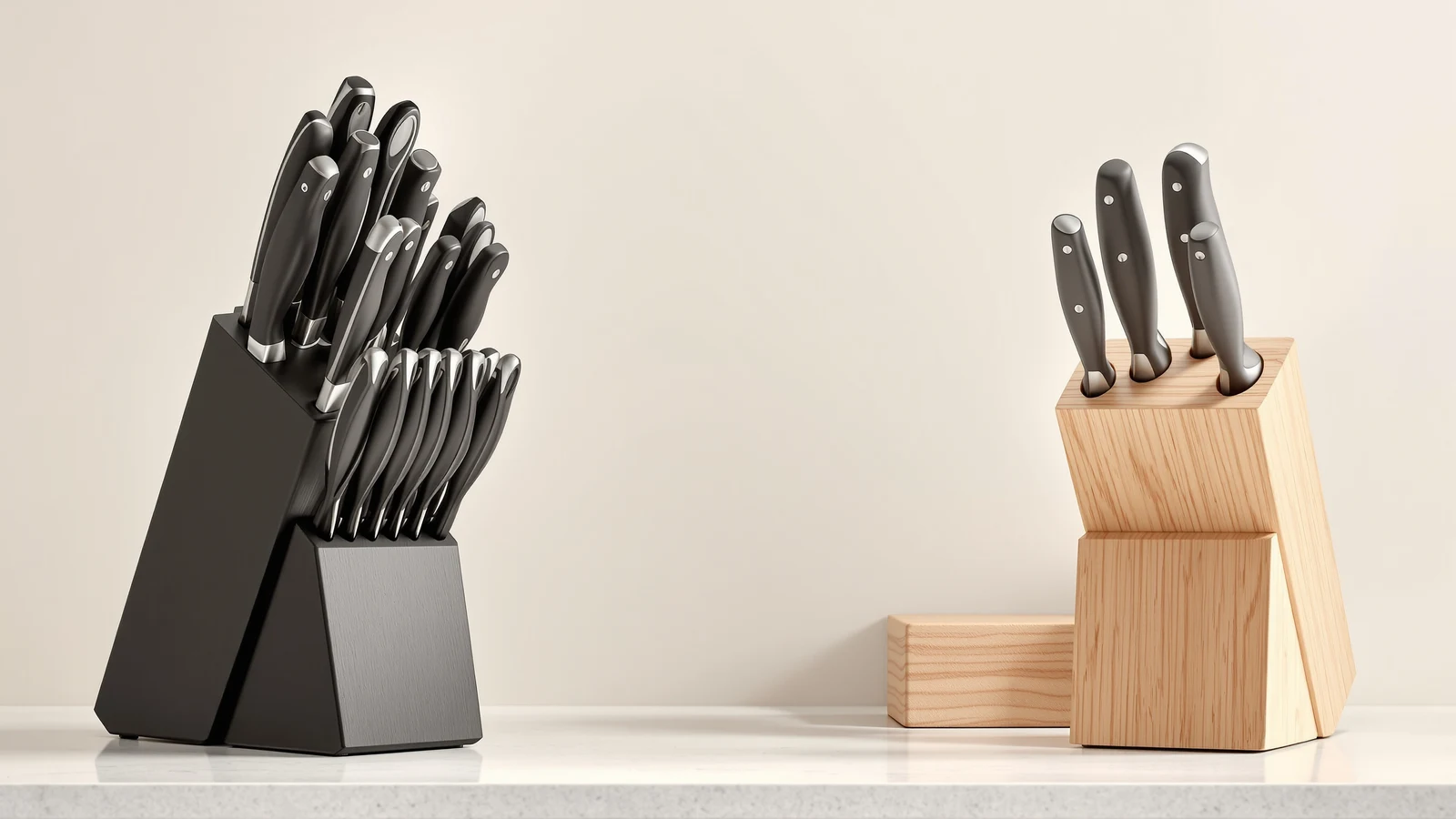
Astercook's Near-Identical $40-to-$65 Sharpener Blocks: What Actually Separates Them
Two Astercook 15-piece sharpener blocks list for the identical $49.99 with nearly the same contents, and a third natural-wood version costs fifteen dollars more. One listing even admits its own blade pattern isn't real Damascus.
 Comparison
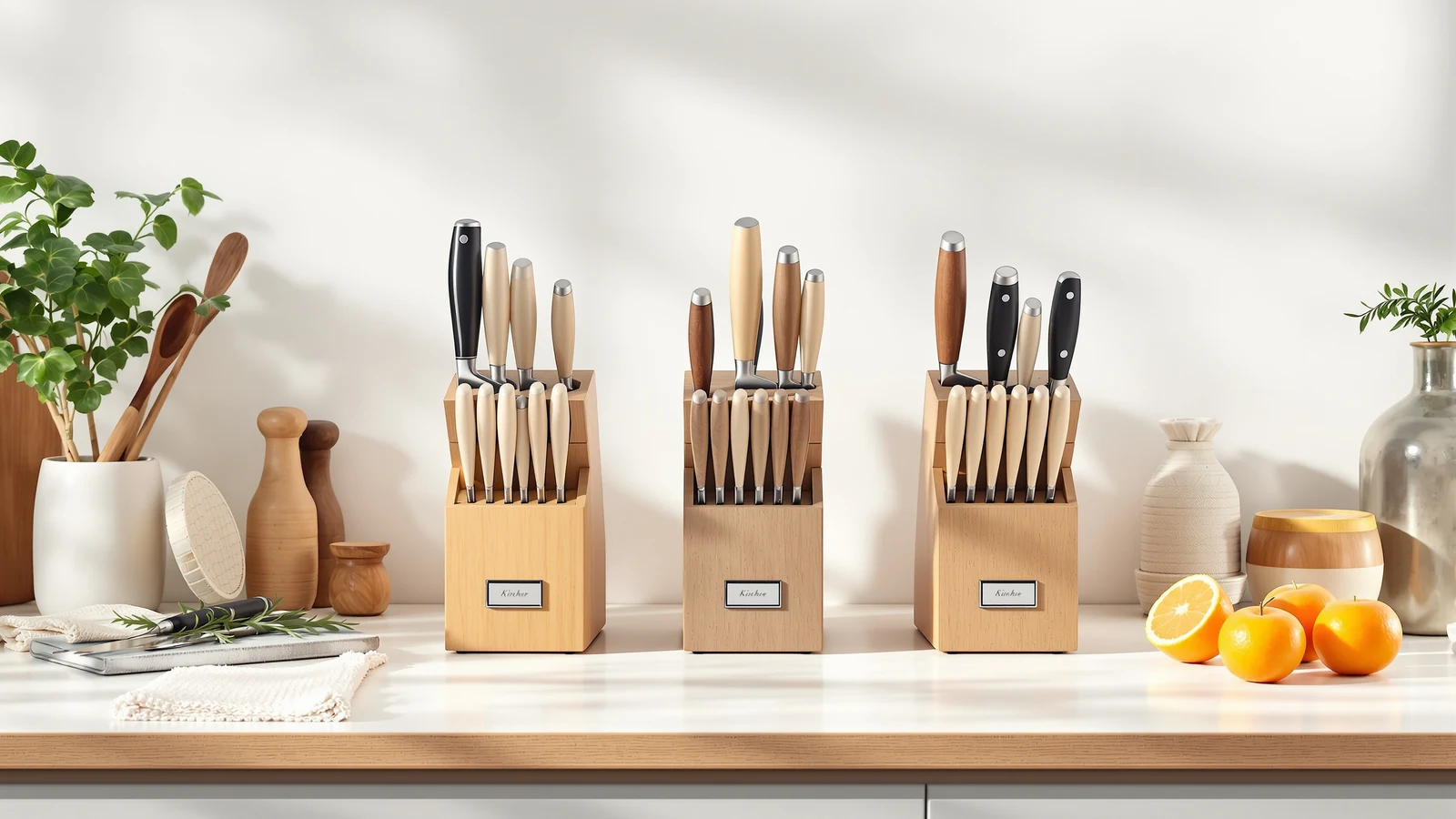
Cuisinart's Hollow-Handle Knife Sets Compared: Three Tiers Above $80
Above its budget lineup, Cuisinart sells three pricier sets built around hollow handles and forged triple rivets. What the extra $50 to $100 over the brand's cheaper blocks is actually paying for.
 Comparison
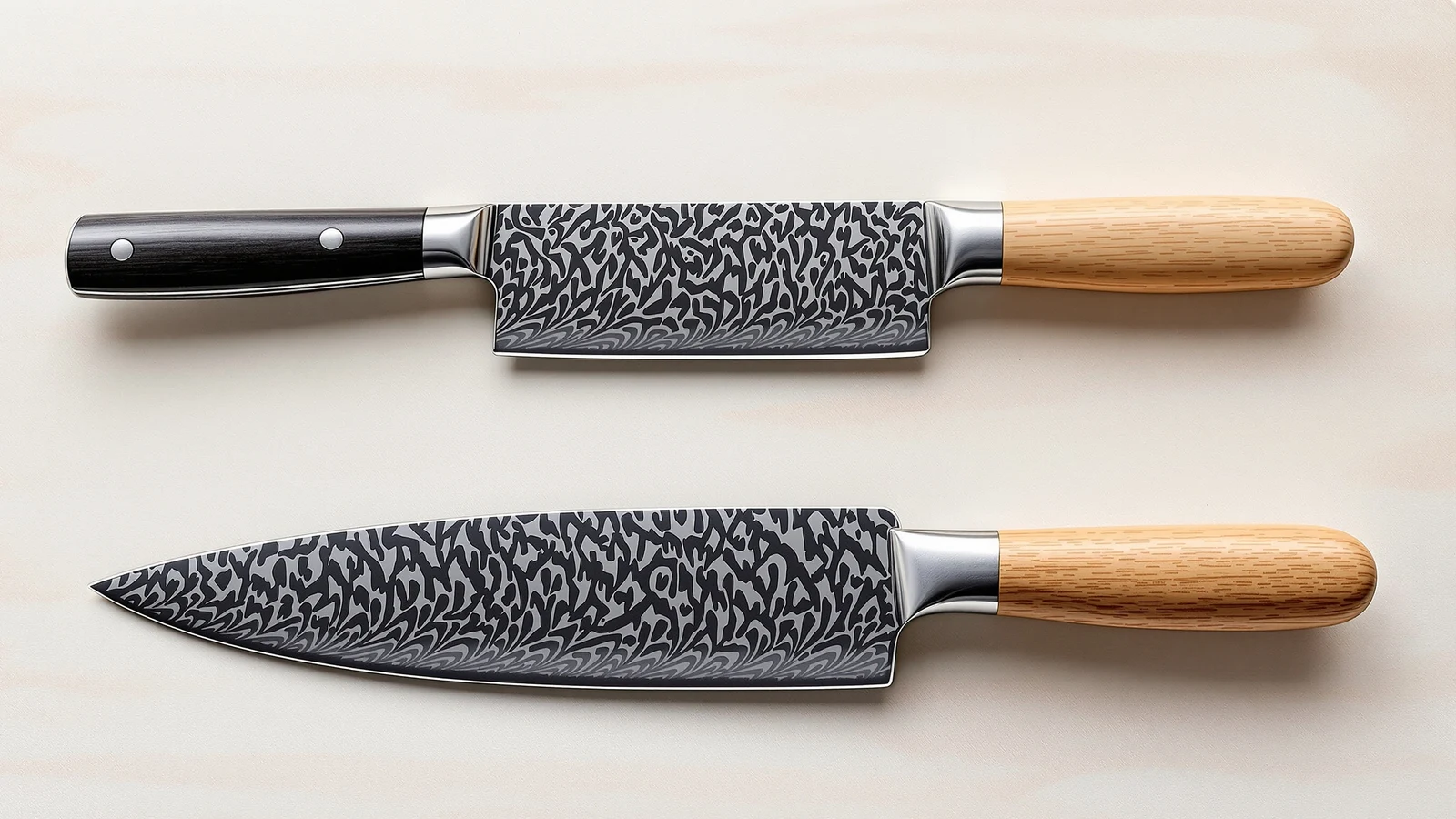
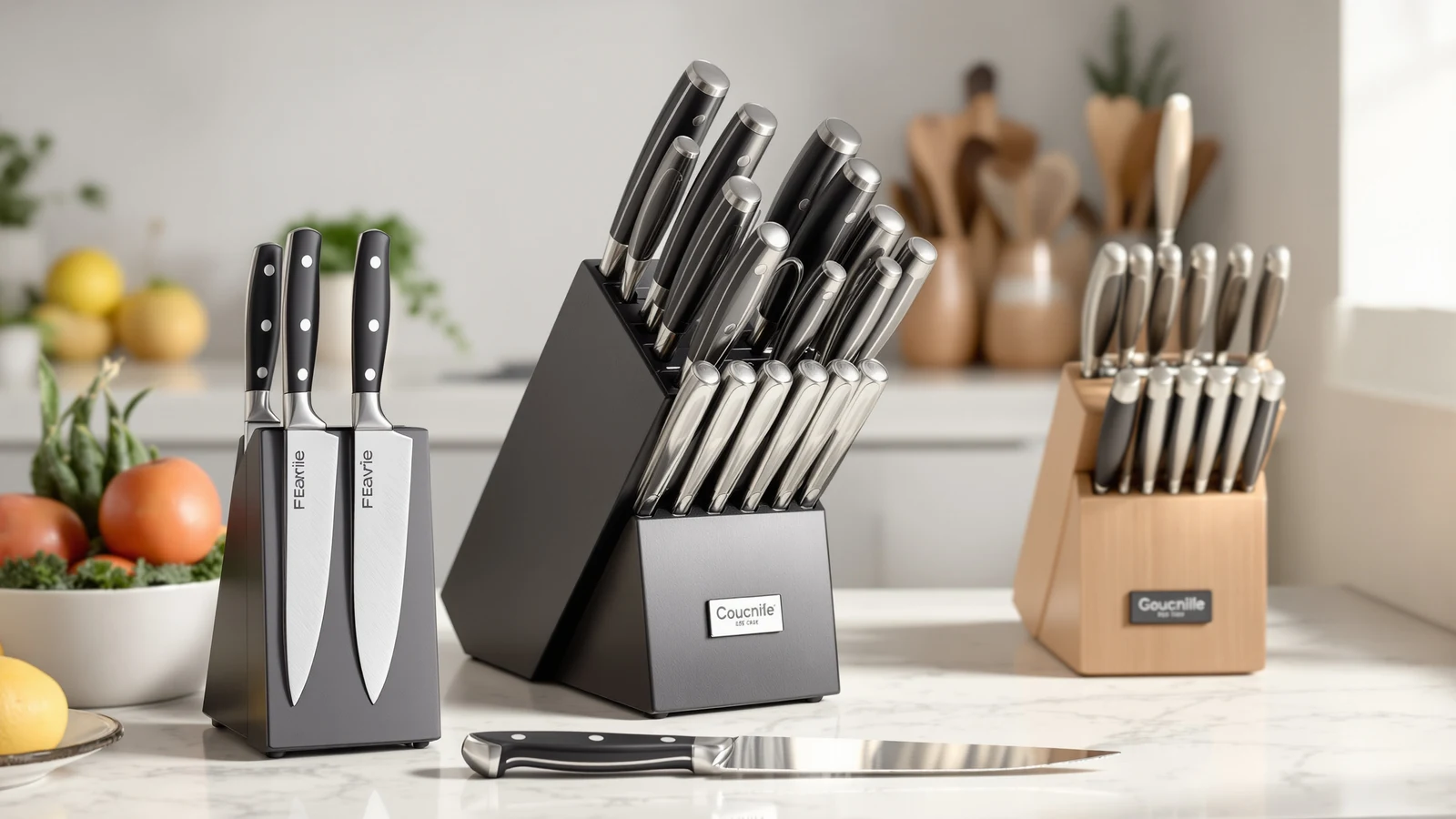
Yatoshi Knives' Two Magnetic 6-Piece Sets: G10 vs Olive Wood at the Same $219.99
Two Yatoshi six-piece magnetic sets share the same VG-10 core, the same 67-layer cladding and the same $219.99 price tag. The handle material is the only thing that changes.
 Comparison
HOSHANHO Knife Sets Compared: 5, 7 and 16 Pieces From $199 to $429
HOSHANHO prices its five-piece set higher than its seven-piece set and its sixteen-piece set higher than both. The hardness numbers and edge angles that actually explain the gap.
 Comparison
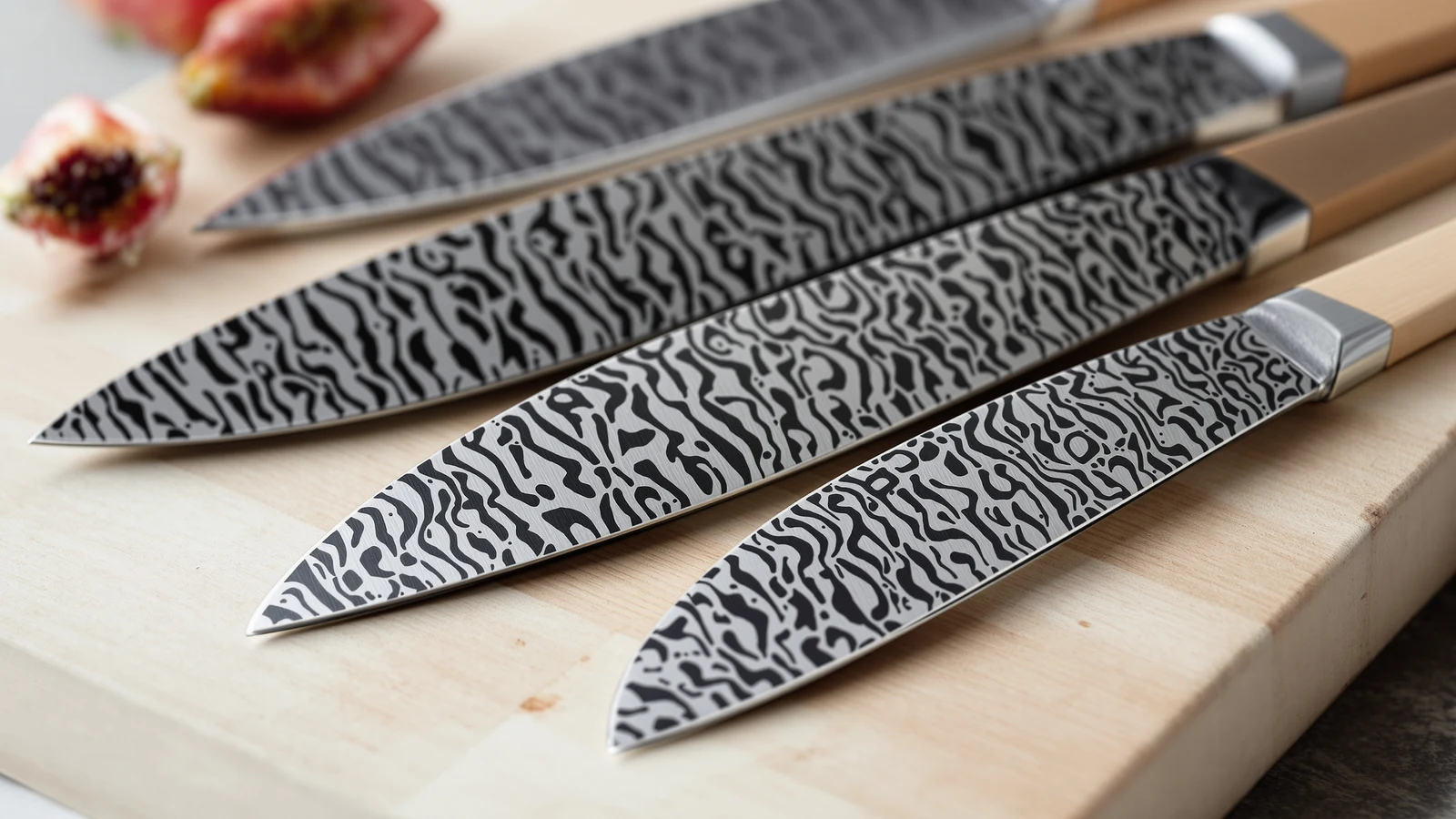
SHAN ZU Damascus Knife Sets Compared: 3 Pieces, 7 Pieces and a $120 Gap
Three SHAN ZU Damascus sets span $169.99 to $289.99, and the priciest one has the fewest knives. What the copper-and-steel pattern and the extra four pieces are each actually buying.
 Honest take
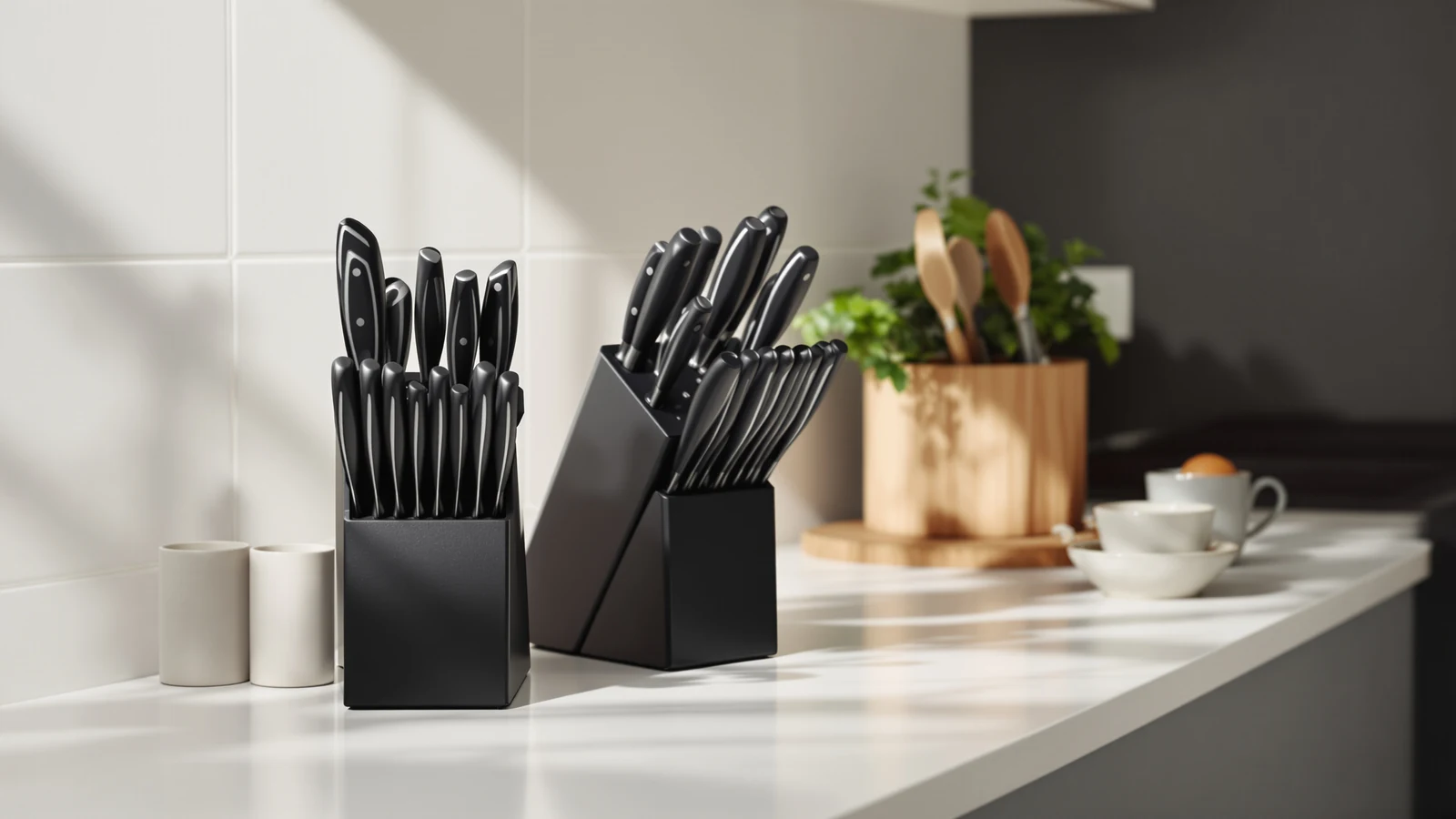
Amorston and Klaus Meyer Knife Sets: When a Bigger Number Means a Smaller Brand
A 21-piece set for $89.99, a 22-piece set for $99.99, and a 19-piece set for $179 from names you likely have not heard of. What the piece count is actually doing for brands without the history to sell on name alone.
 Review
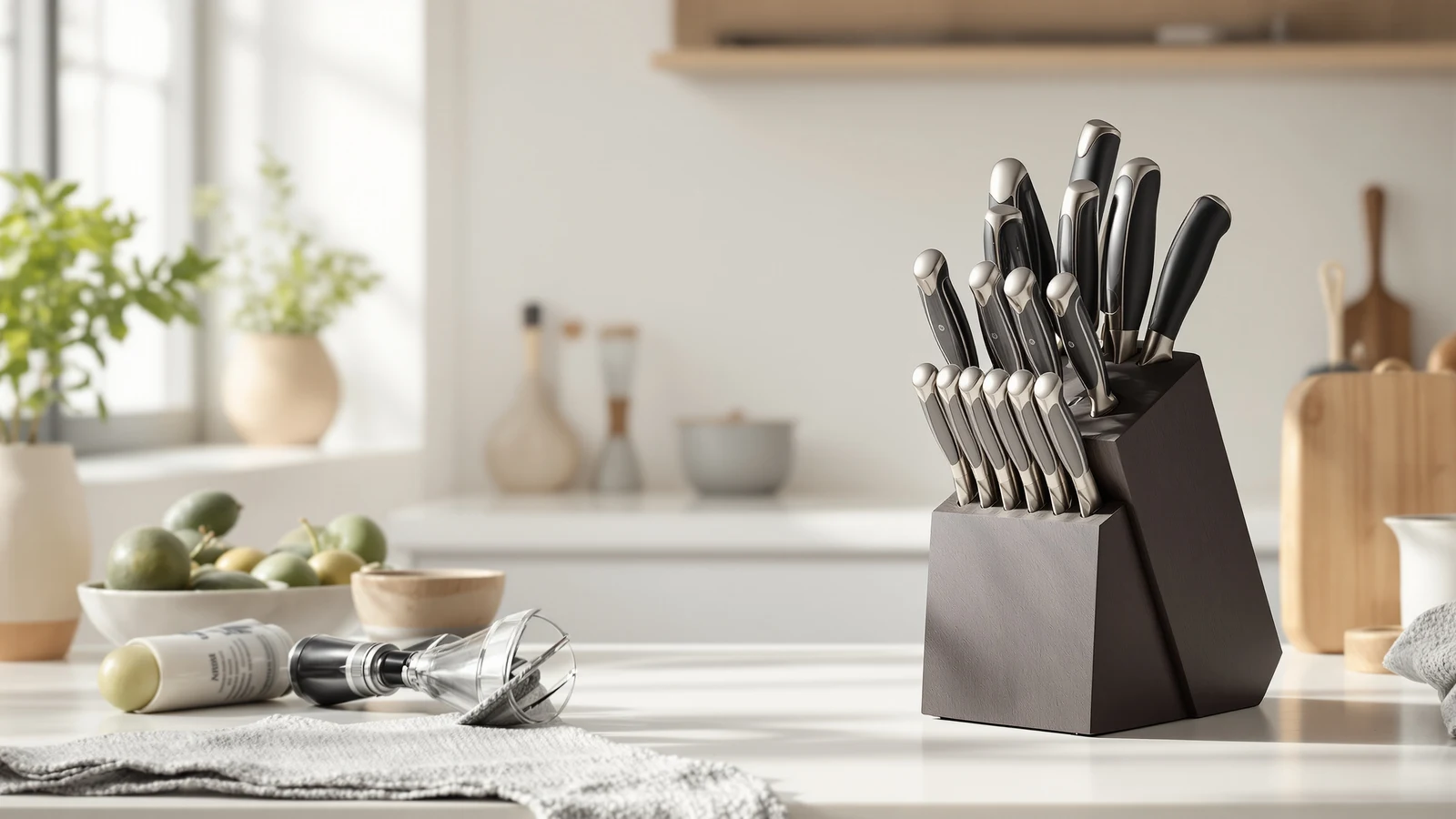
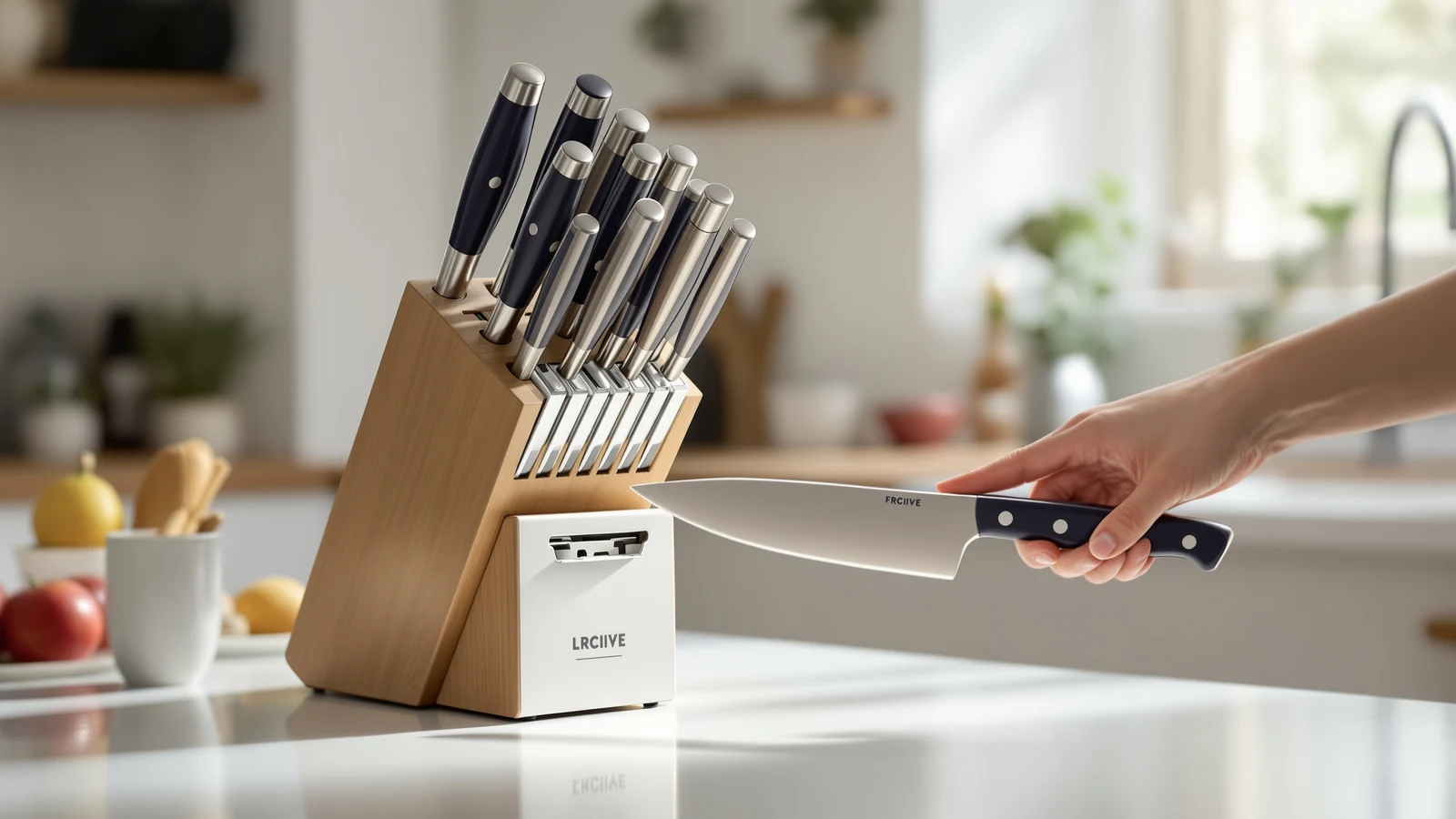
Chicago Cutlery Insignia 18-Piece Knife Set: Full Review
Triple-riveted handles, a wooden block and a built-in sharpener for $220.99 from one of the oldest names in American cutlery. What the heritage brand actually delivers at this price.
 Review
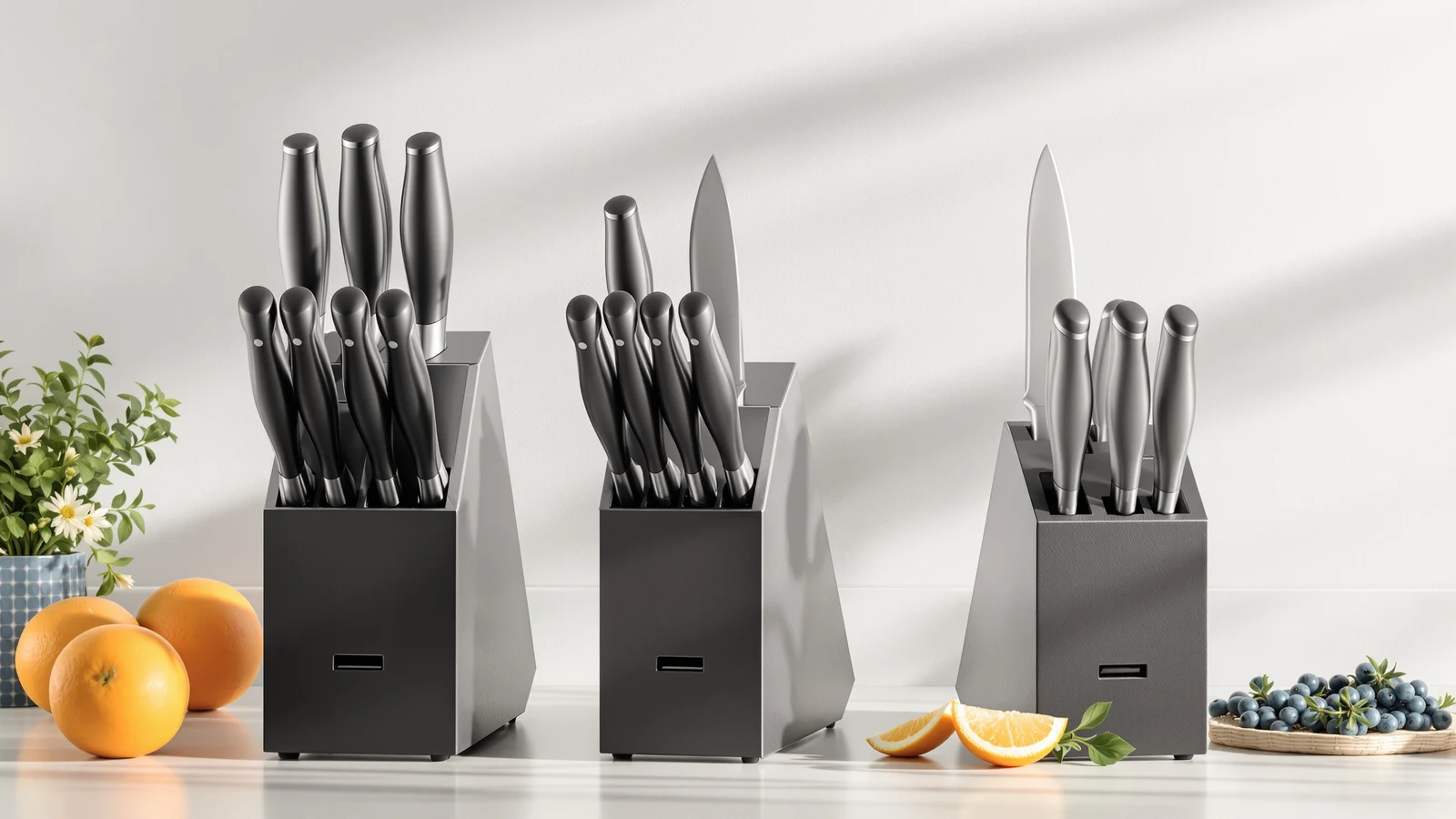
KitchenAid Gourmet 15-Piece Knife Set: Full Review
A built-in sharpener and a recognizable appliance brand for $79.99. What's actually in the block, and whether the KitchenAid name adds anything a $50 set does not.
 Comparison
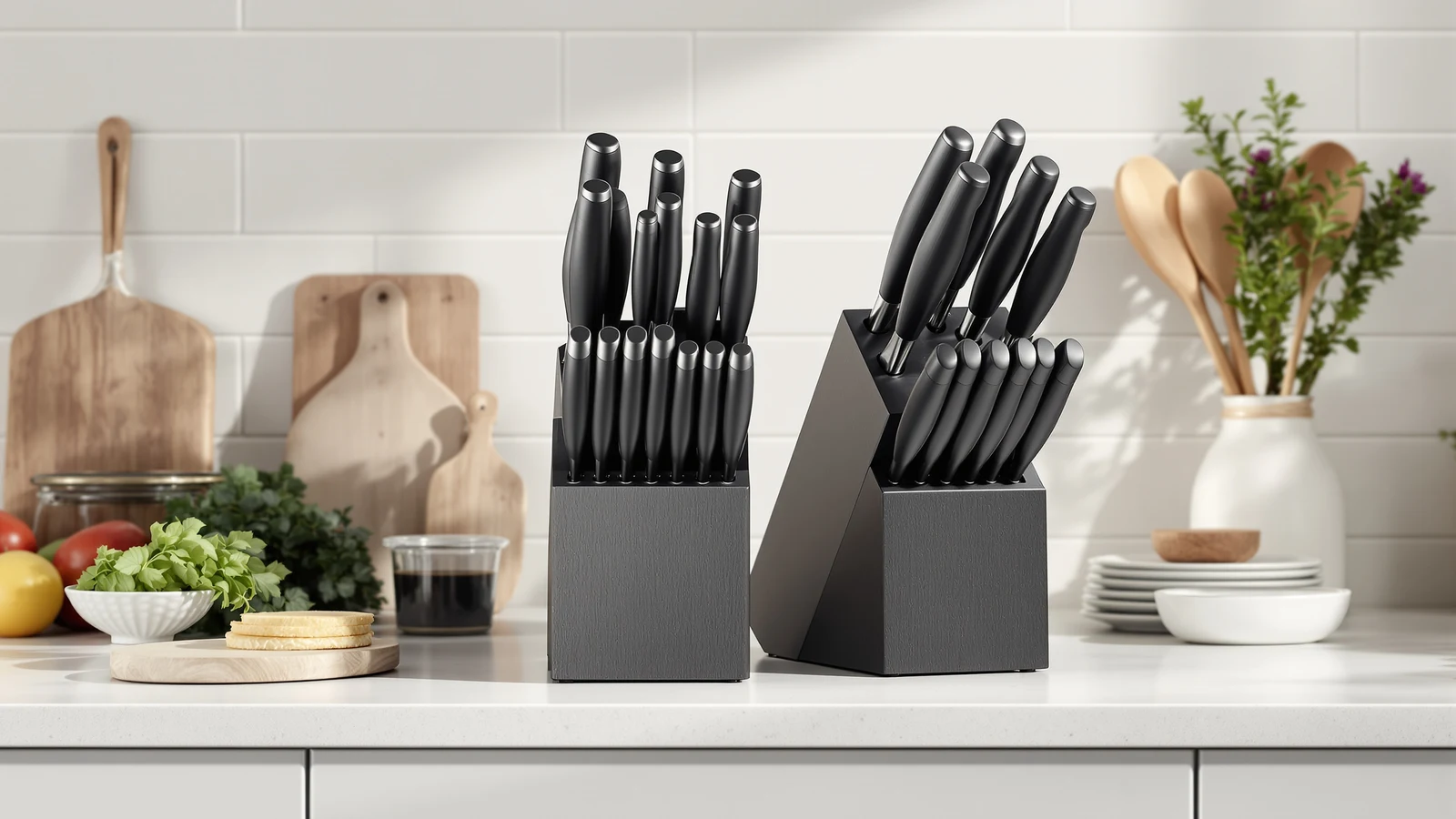
Ninja NeverDull Knife Sets Compared: 12, 14 and 17 Pieces
The same built-in sharpening slot across three block sizes, and a $180 gap between the smallest and the largest. What the extra pieces and the extra money actually buy.
 Honest take
McCook Knife Sets Compared: Same Price, Different Listings
Two McCook 15-piece sets list for the identical $125.99 with nearly identical specs, and a 20-piece set undercuts both at $119.99. What actually separates the listings, if anything does.
 Comparison
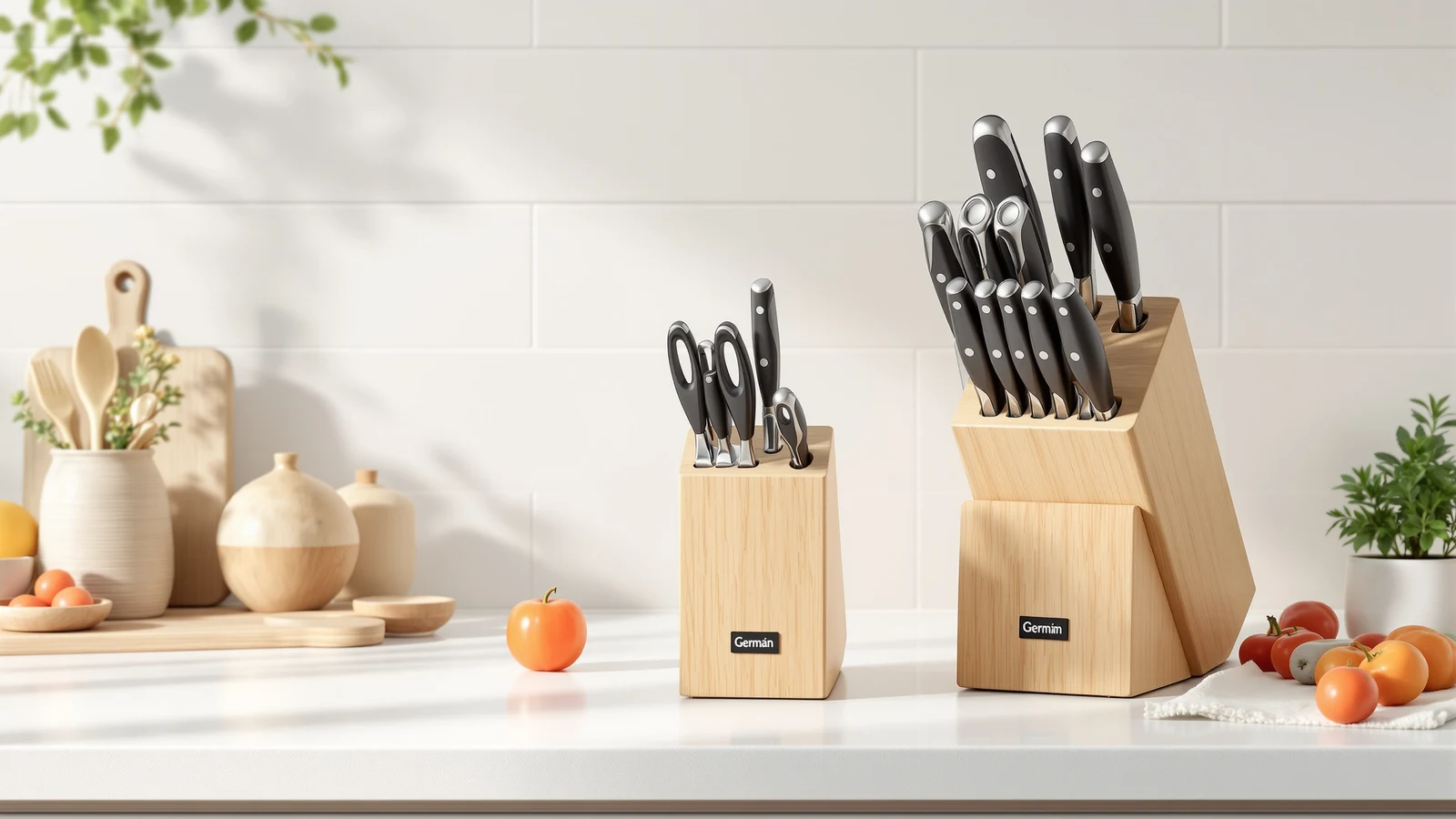
Henckels Statement Knife Sets Compared: 12, 15 and 20 Pieces
Same German-engineered line, three block sizes and a seventy-dollar gap between the smallest and the largest. What the extra pieces are, and whether the jump is worth it.
 Honest take
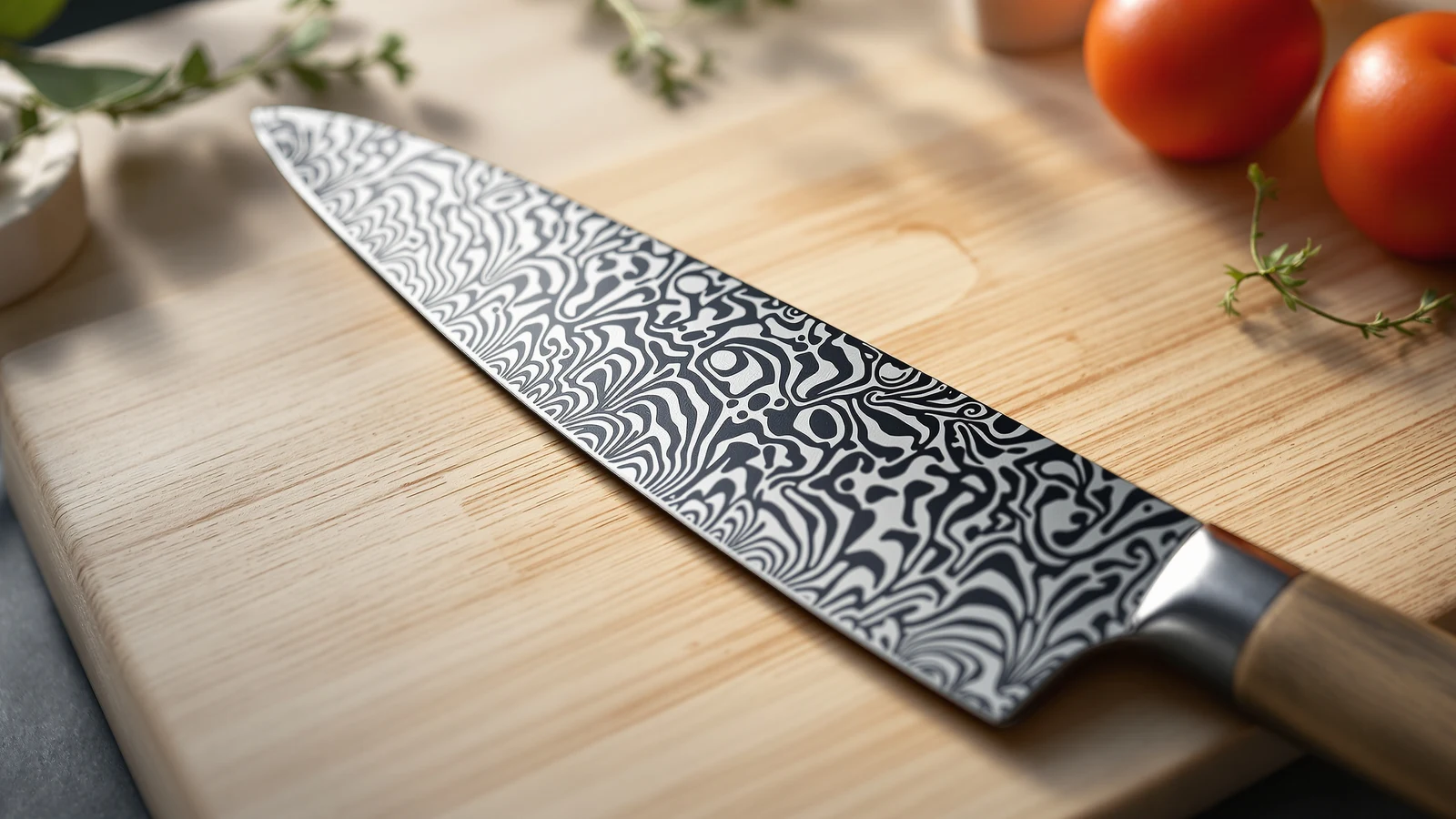
Damascus Steel Knife Sets: Is the Pattern Actually Different Steel?
A folded, acid-etched pattern looks like an upgrade on every listing that has one. What a named steel core under the pattern changes, and what the Damascus look alone does not.
 Honest take
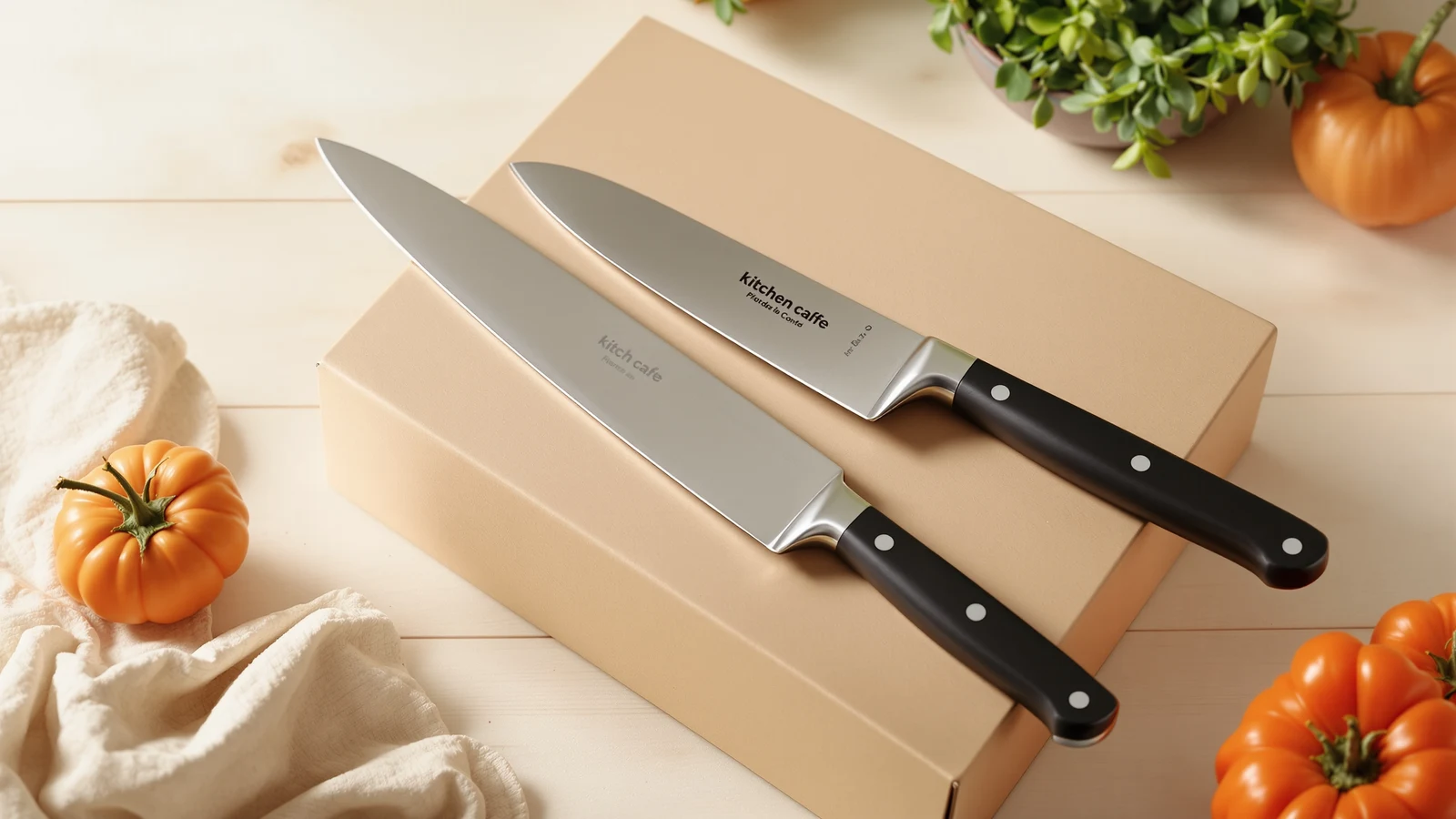
Do Knife Sets Actually Come With a Warranty That Means Something?
A warranty is only as good as the company behind it. What's actually written on three listings in this catalogue, and what happens when you try to use it.
 Buying guide
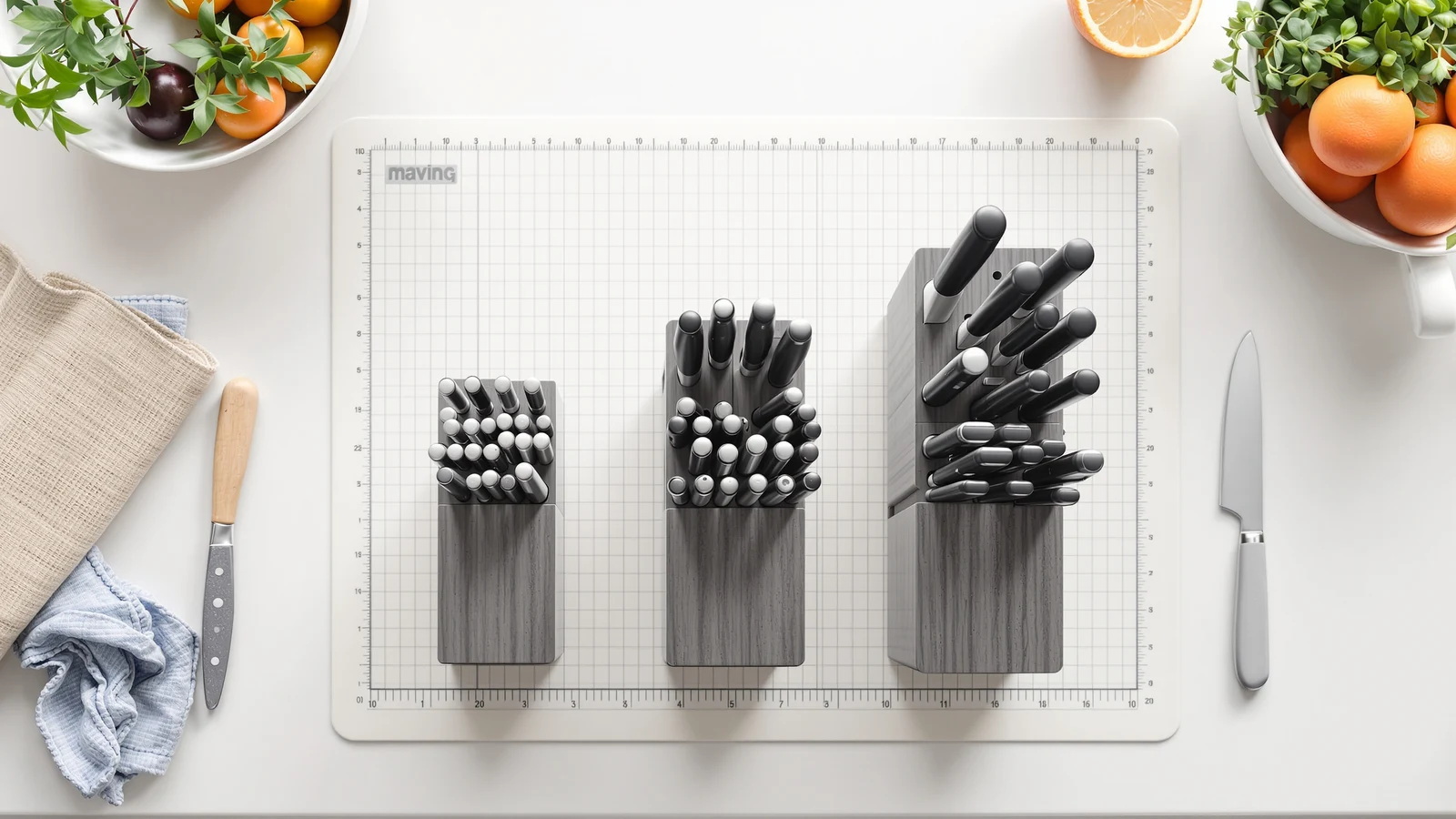
How Much Counter Space Does a Knife Block Actually Need?
A 7-piece block and a 20-piece block can differ by a foot of counter. The measurements worth taking before you buy, with real footprints from three sets in this catalogue.
 Review
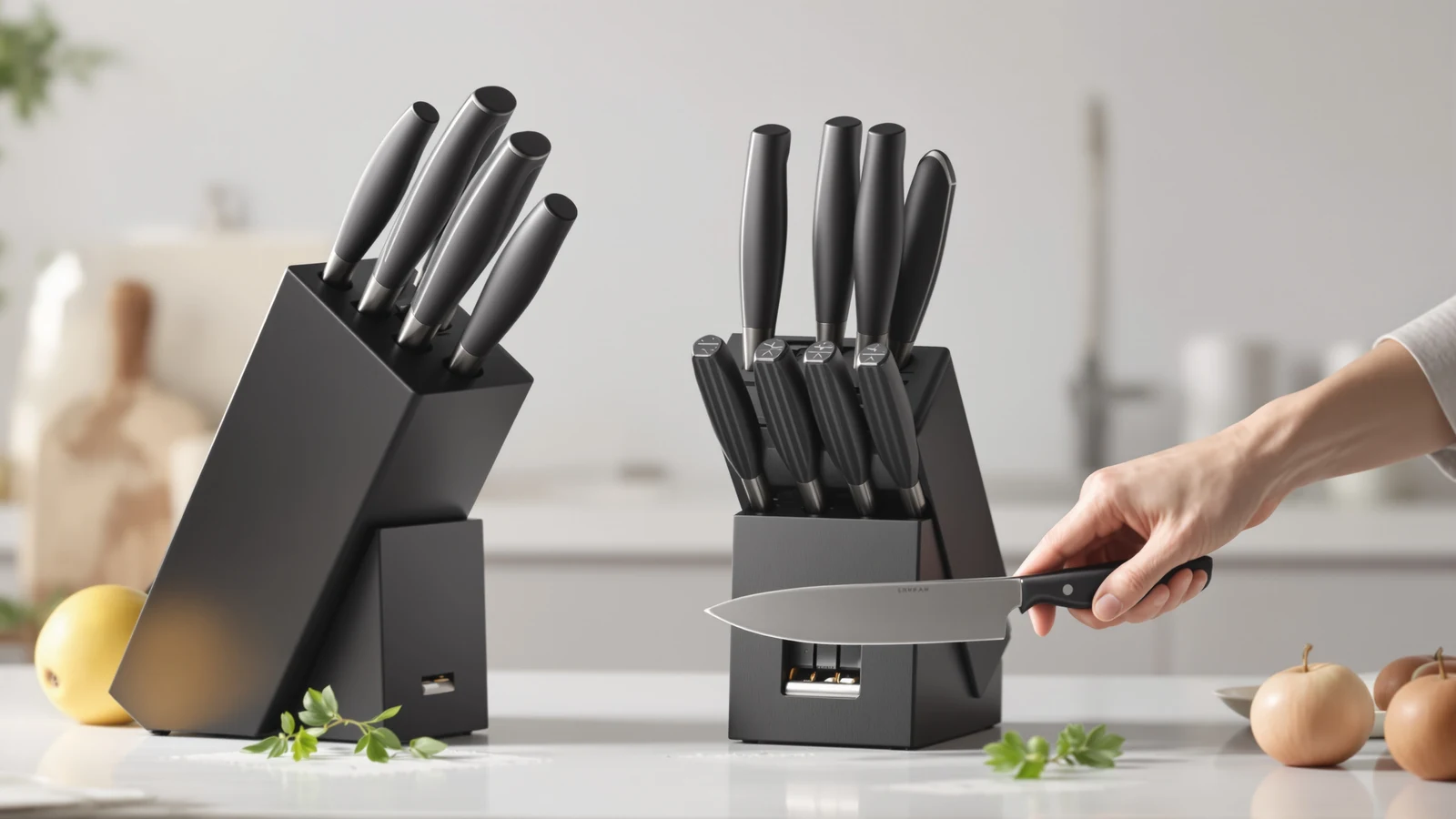
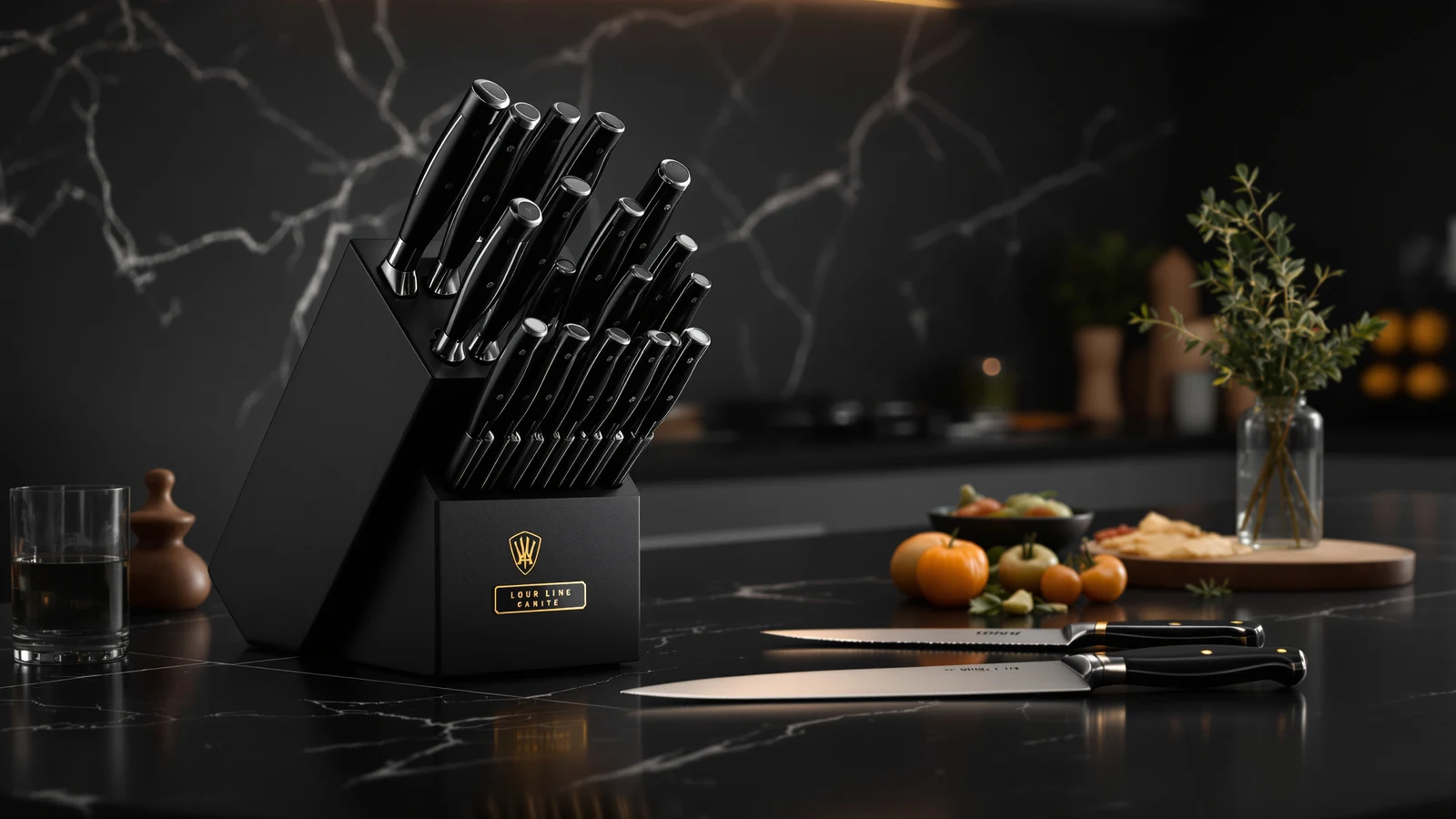
Ninja NeverDull 17-Piece Knife Block Set: Full Review
A $394.99 block built around a built-in sharpener Ninja calls NeverDull. What the mechanism does on knife one and on knife two hundred, and whether the brand name changes anything.
 Review
The HOSHANHO 20-Piece Knife Set: Is $570 Worth It?
The most expensive set in this category by a wide margin. What twenty pieces and a premium block actually add over a $200 set, and who should not buy it.
 Review
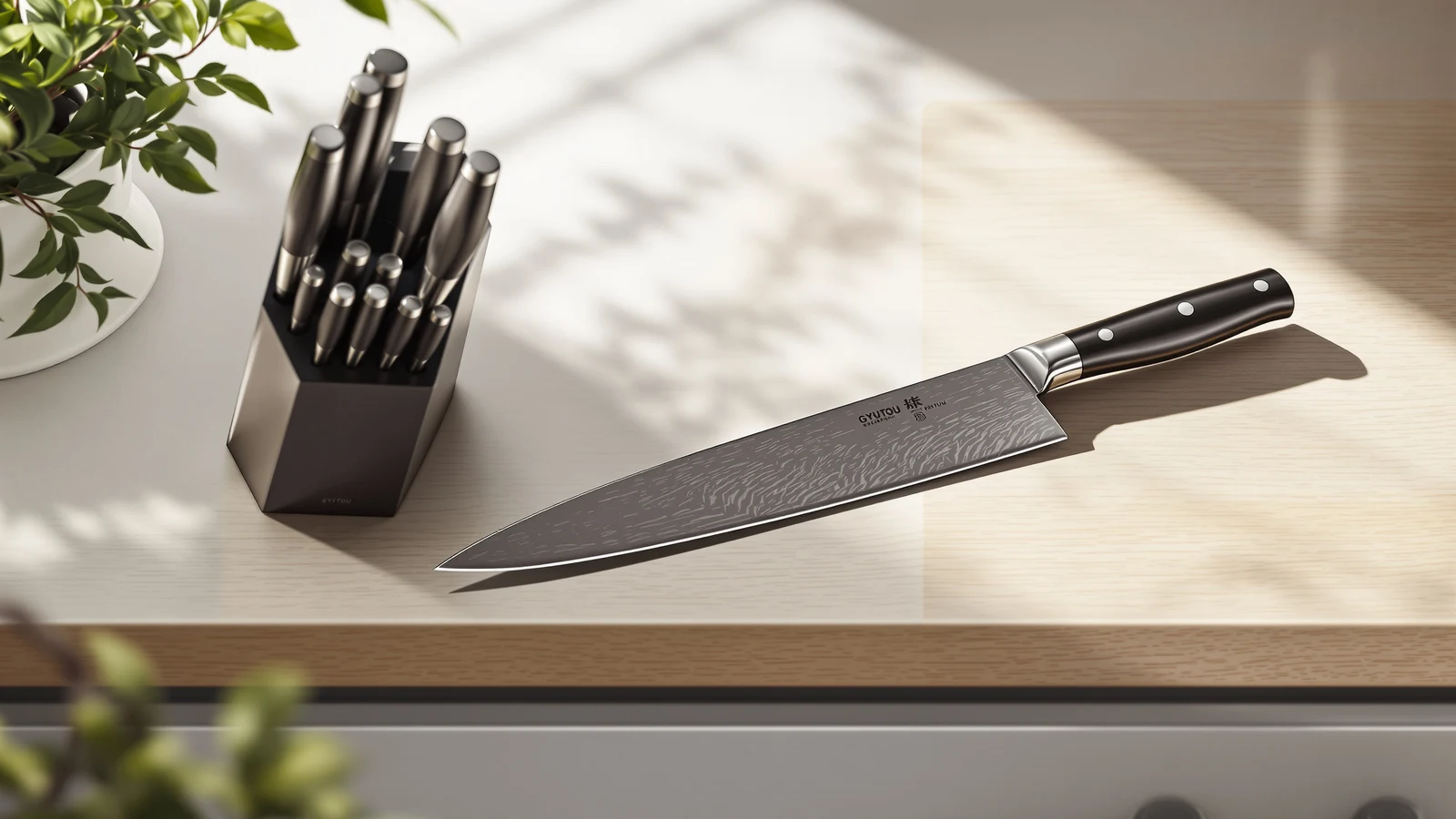
imarku 14-Piece Japanese Gyutou Knife Set: Full Review
A 10-15 degree edge and a built-in sharpener for $199.99. What the precision-forged claim and the gyutou profile actually deliver, knife by knife.
 Comparison
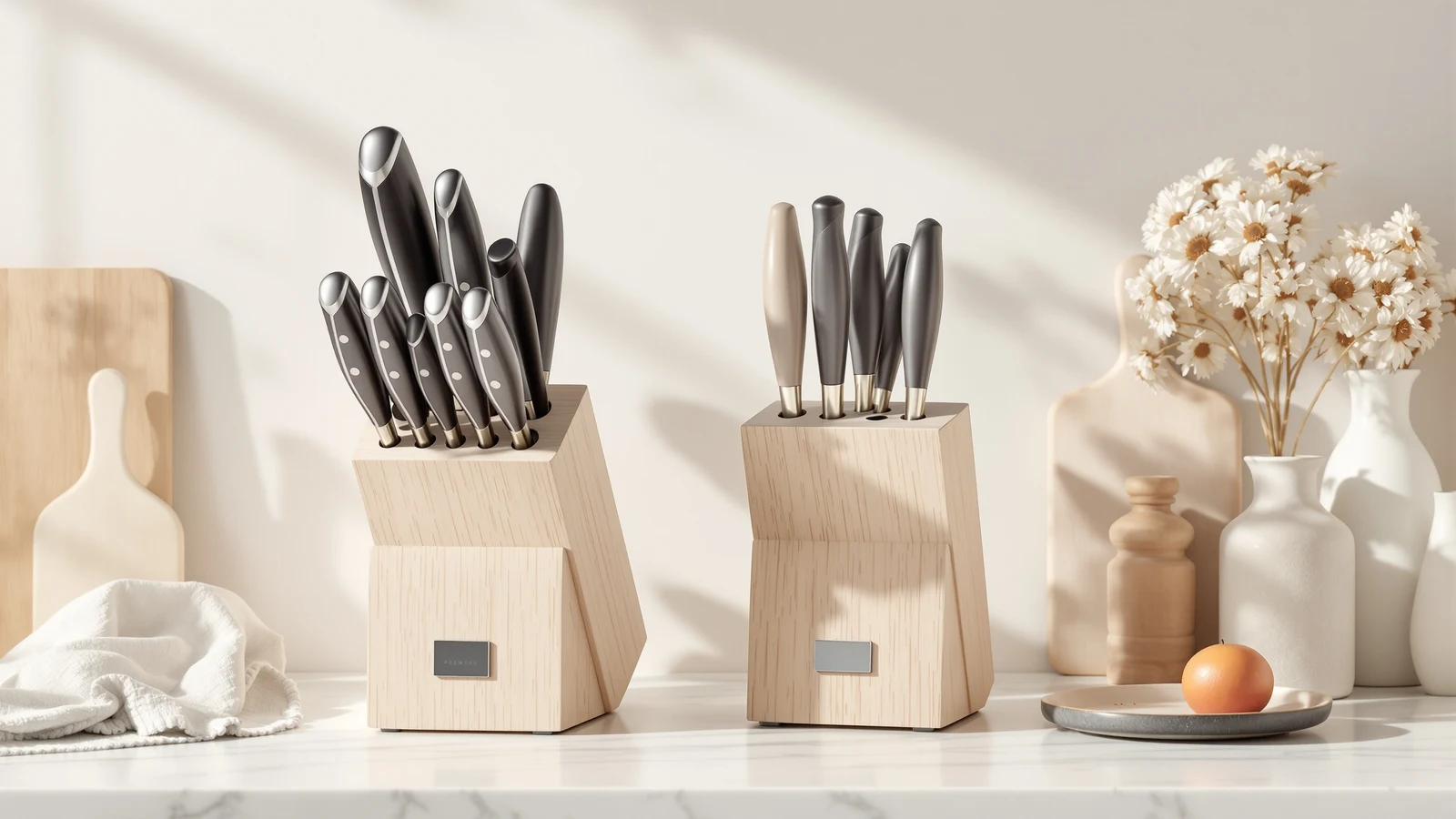
Martha Stewart Knife Sets Compared: 14-Piece vs 16-Piece
Both sets use acacia wood blocks and triple-riveted handles; the gap is two pieces and twenty-five dollars. What the extra pieces and the extra steel actually are.
 Comparison
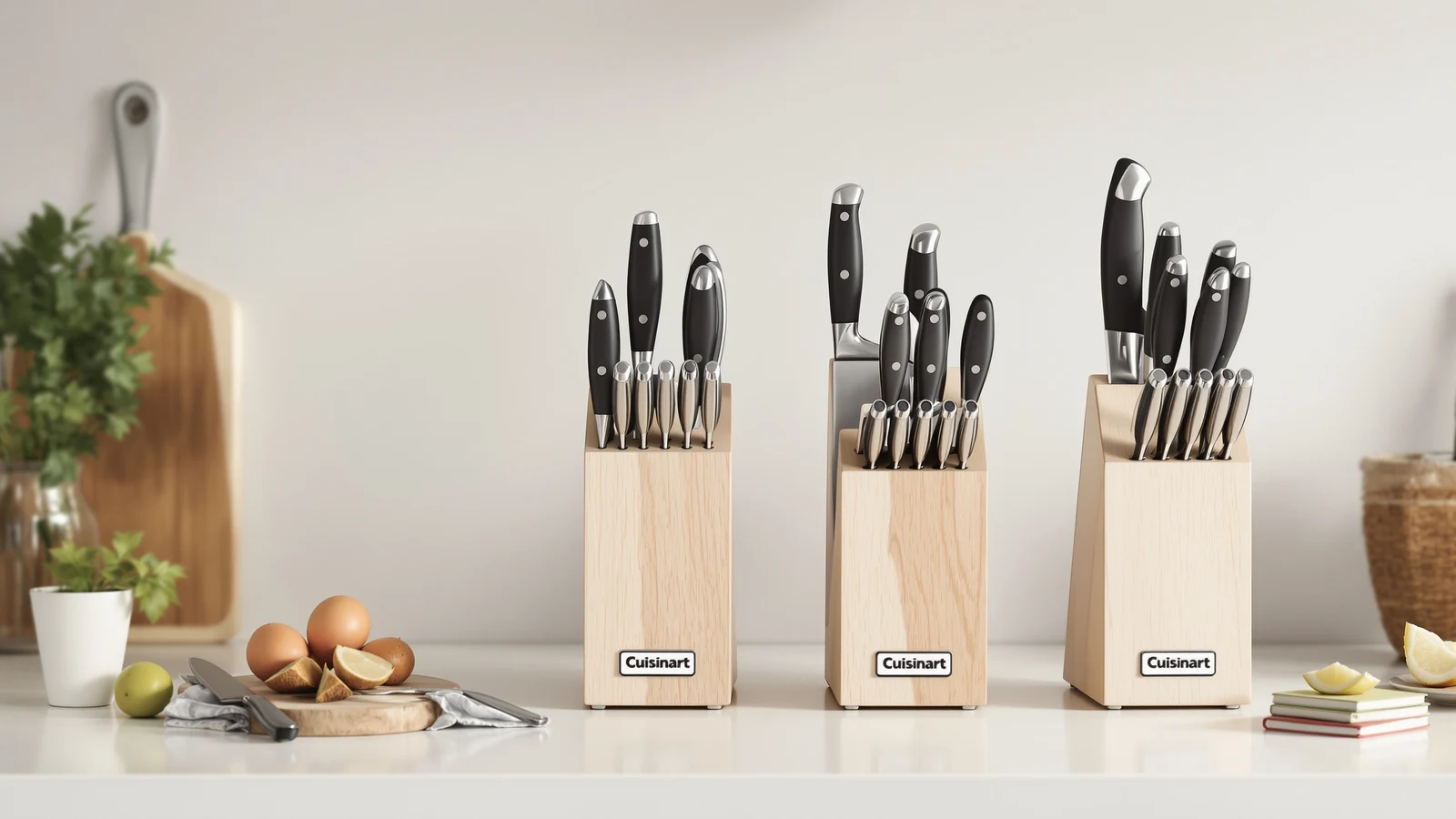
Cuisinart Knife Sets Compared: From $18 to $80
Cuisinart sells a 12-piece set for under $20 and a 7-piece block with a built-in sharpener for $68. Four Cuisinart sets, and which tier actually matches which kitchen.
 Buying guide
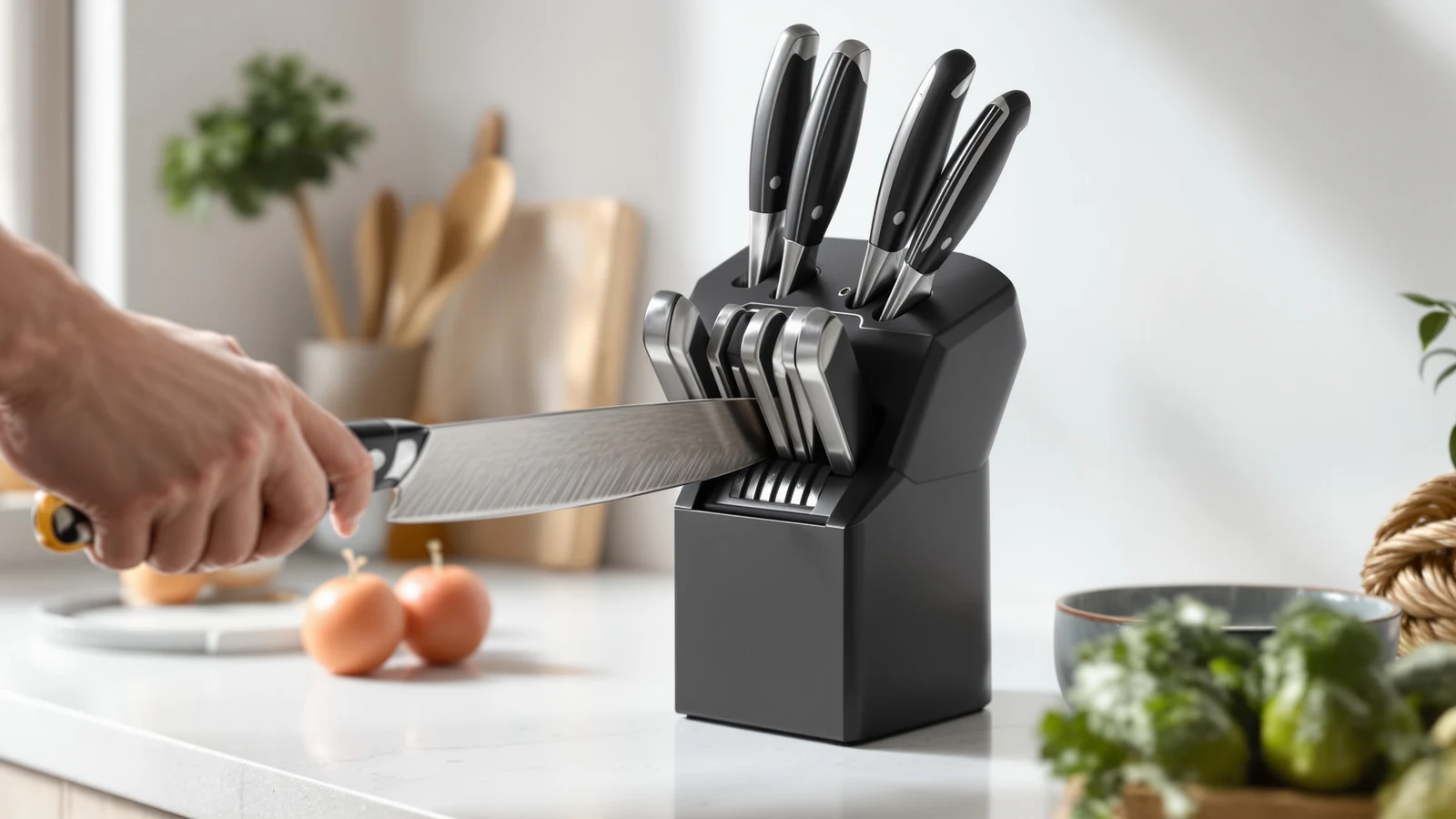
Pull-Through Sharpeners vs Honing Steels: What's Actually Keeping the Edge in These Sets
A slot sharpener touches the edge every time you put the knife away. A honing steel does nothing until you pick it up. Some sets include neither. The difference matters more than the block.
 Buying guide
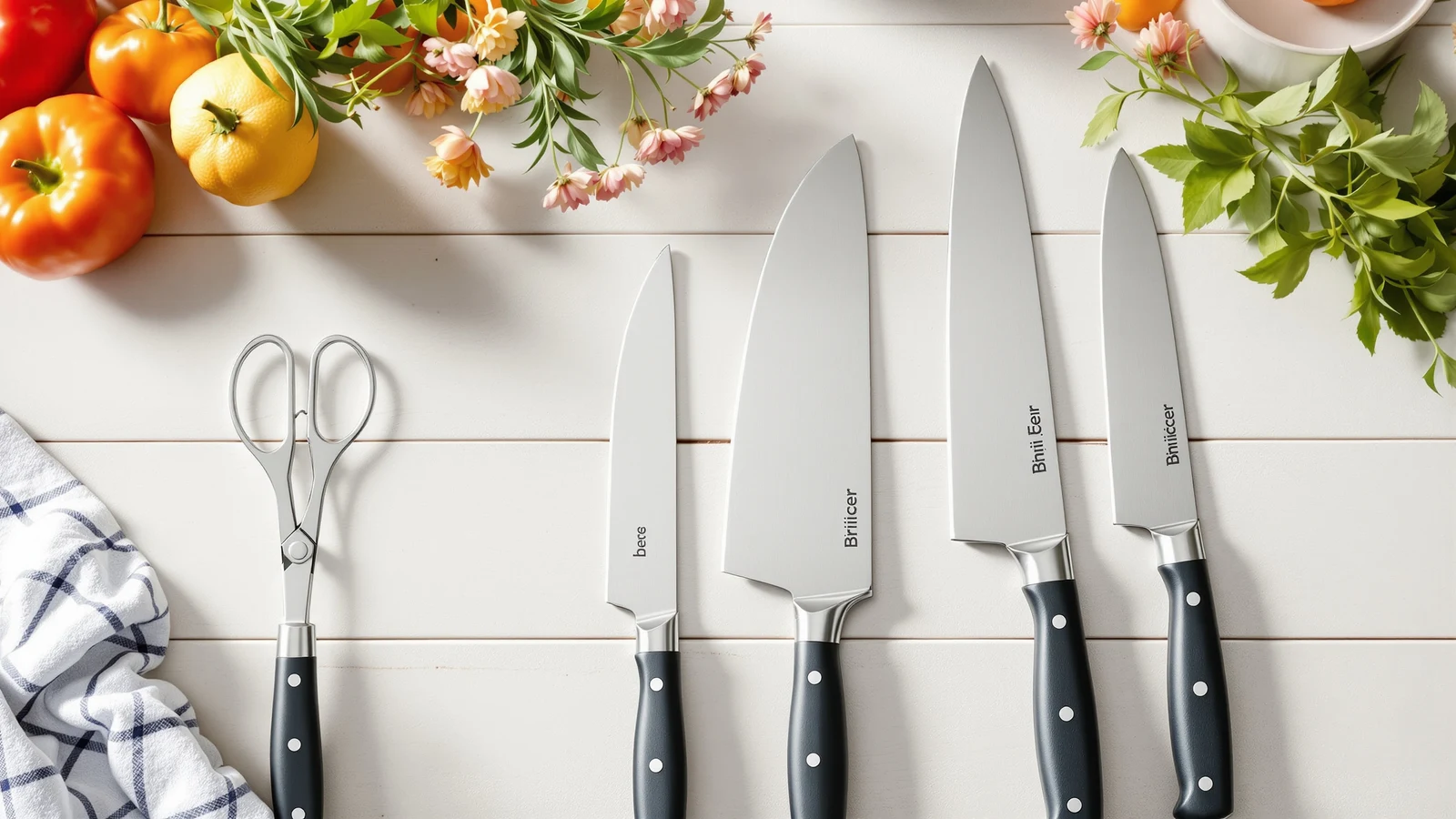
The Extra Pieces Hiding in a Knife Block Set: Shears, Guards and Sharpeners
Shears, six blade guards and a sharpening slot can each count as a 'piece' on the box. None of them are a knife. What they are actually worth before you let them inflate the number.
 Buying guide
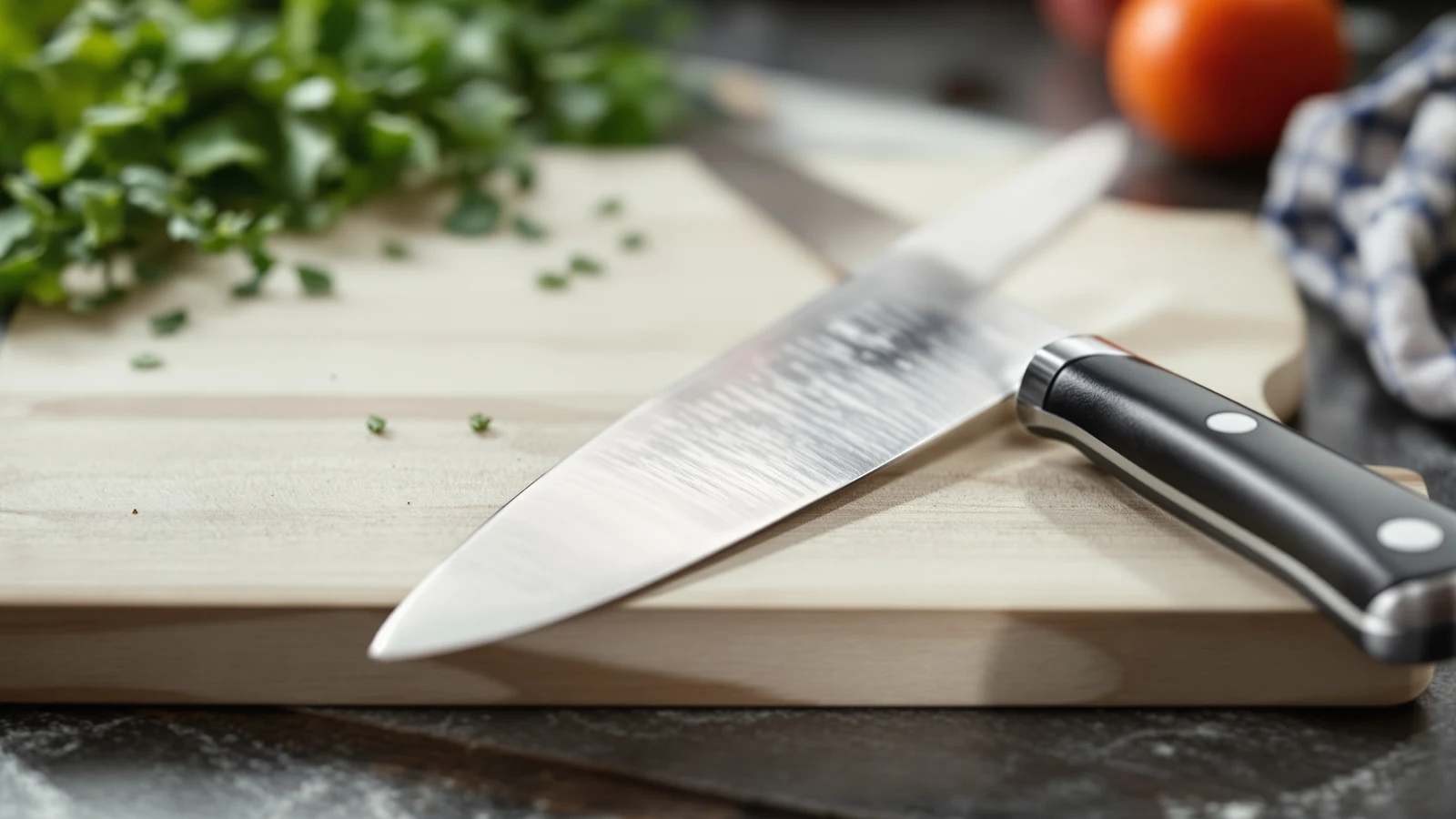
Knife Handle Materials: ABS, Triple-Riveted and What 'Ergonomic' Actually Means
A riveted handle is not decoration, and 'ergonomic' on a listing rarely comes with a shape you can check before buying. What the handle is actually doing while you cut.
 Comparison
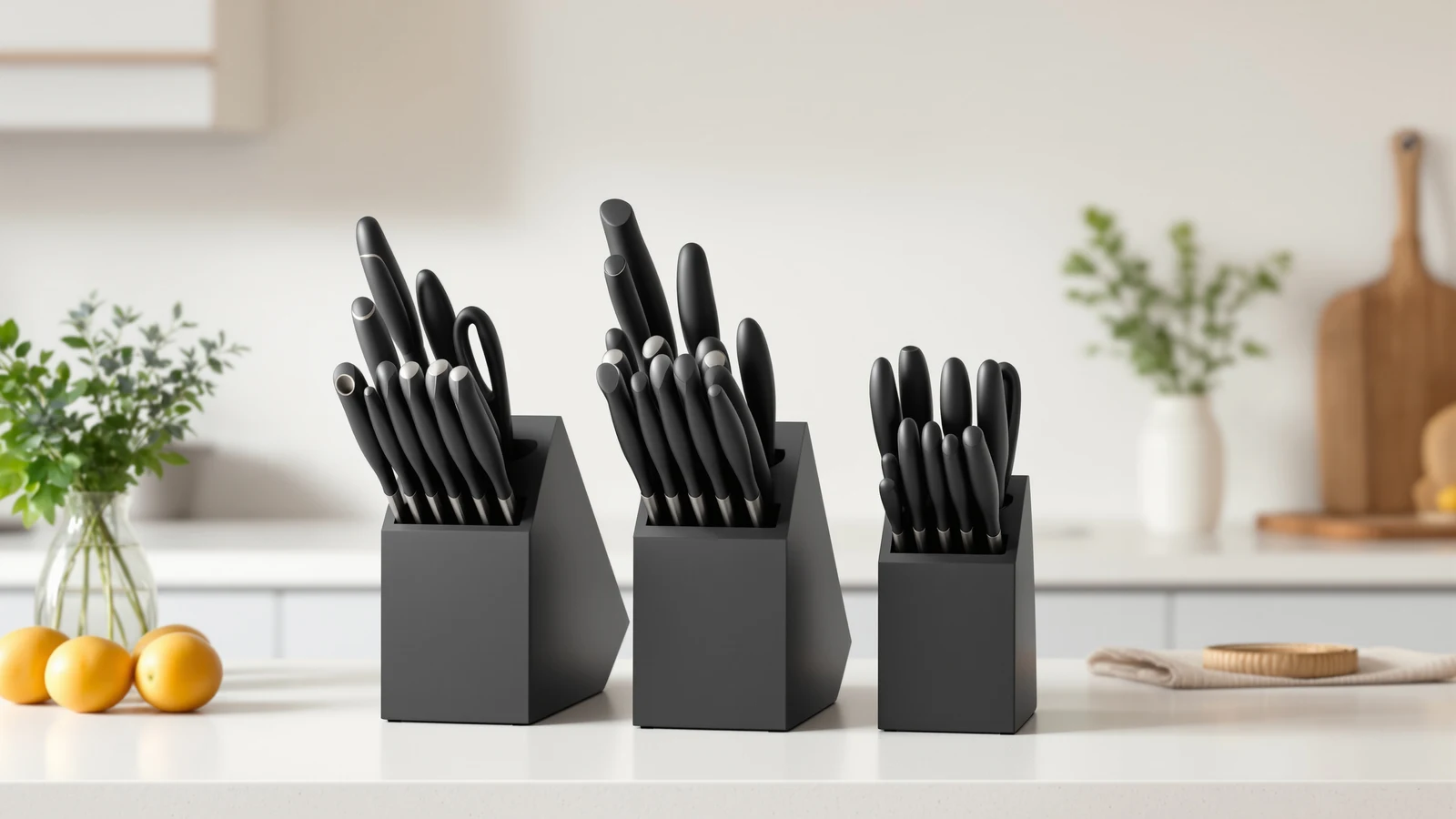
Astercook Knife Sets Compared: Which Tier Should You Buy?
Astercook sells a 13-piece anti-rust set, a 15-piece German-steel set and a 15-piece German-steel set with a sharpener, from $29.98 to $59.99. What the money actually buys between them.
 Honest take
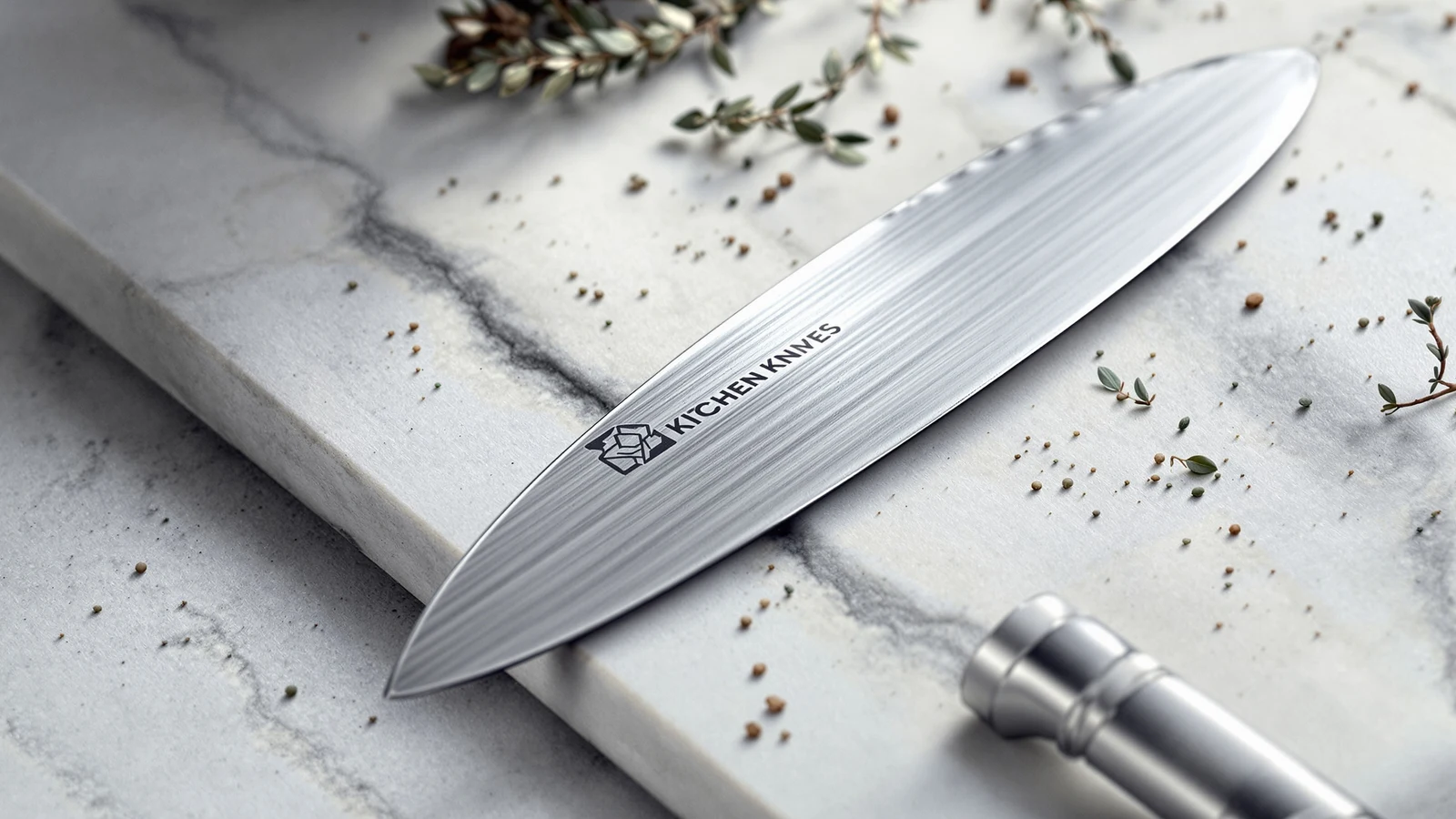
What 'High Carbon Stainless Steel' Actually Guarantees
The phrase is on almost every listing in this category and on its own it guarantees almost nothing. What it means when a brand also publishes a hardness number, and what it means when that is all they say.
 Roundup
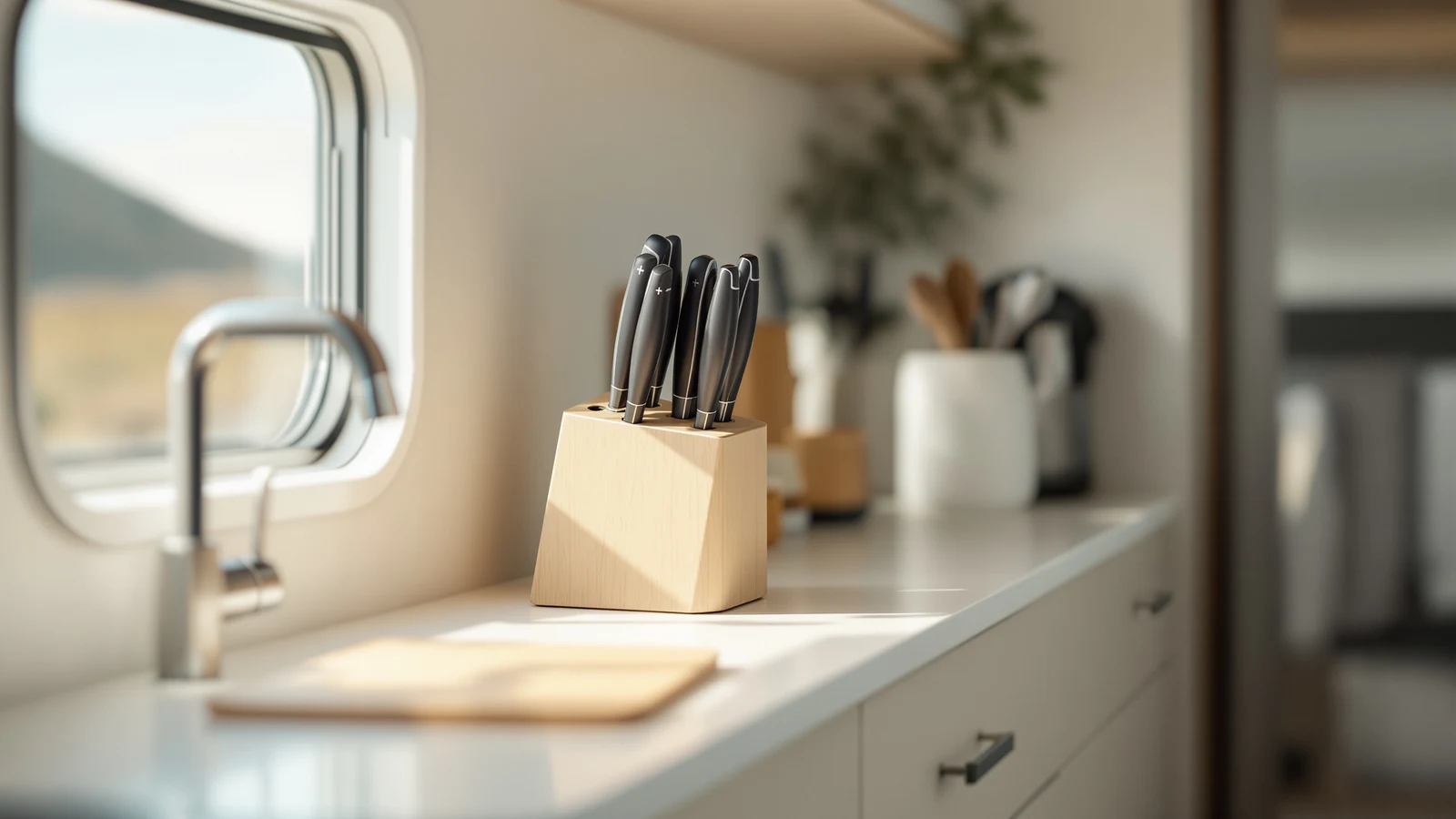
The Best Knife Sets for RVs, Campers and Small Kitchens
A full-size block will not fit on a camper counter. Three sets built or sized for a kitchen that measures its counter space in inches, not feet.
 Comparison
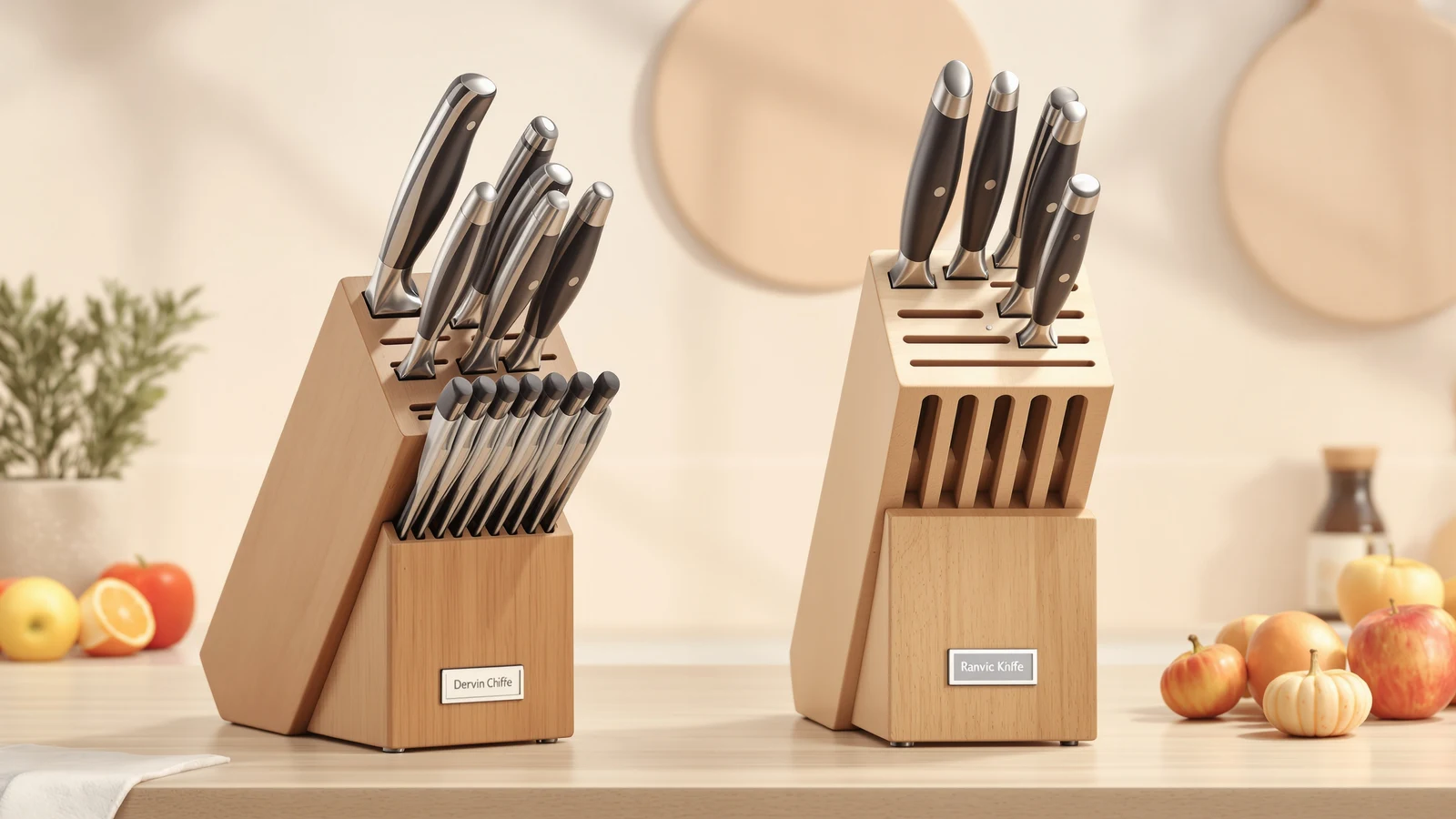
Universal Knife Blocks vs Fixed-Slot Blocks: Does the Flexible Design Work?
One block uses bristles or pins that flex to fit any blade; the other has a slot cut for a specific knife. What you gain in flexibility, and what you give up in grip.
 Honest take
"Ultra-Sharp" and "Razor-Sharp": What Knife Set Marketing Words Actually Tell You
Every listing in this category claims to be sharp out of the box. None of them publish a way to check. What these two phrases are standing in for, and how to tell a genuinely sharp edge without a lab.
 Roundup
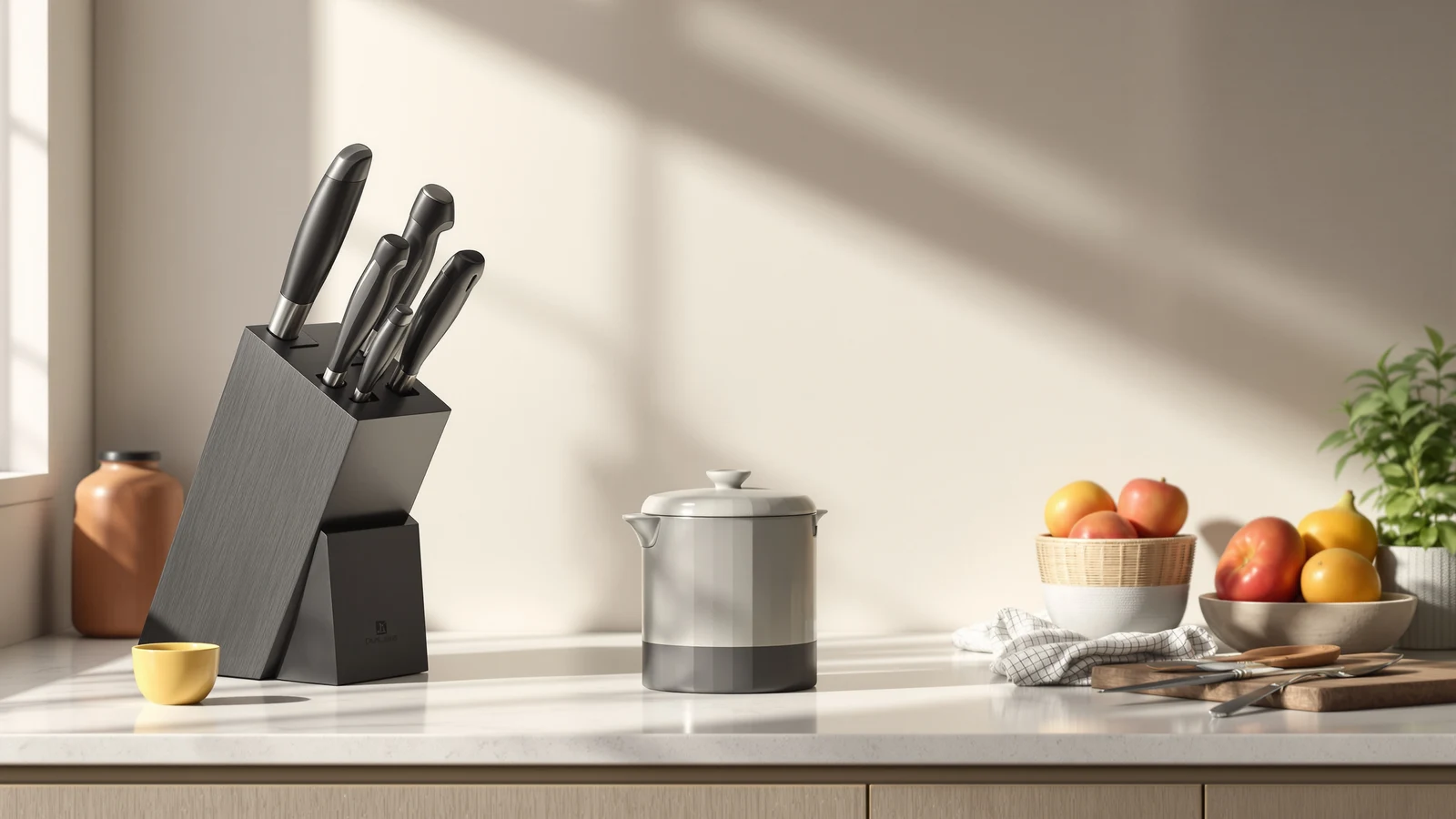
The Best Knife Sets Between $100 and $200
This is where German engineering and Japanese-style grinds start to overlap in price. Three sets in the middle of the catalogue, and what the extra money over the fifty-dollar sets buys.
 Buying guide
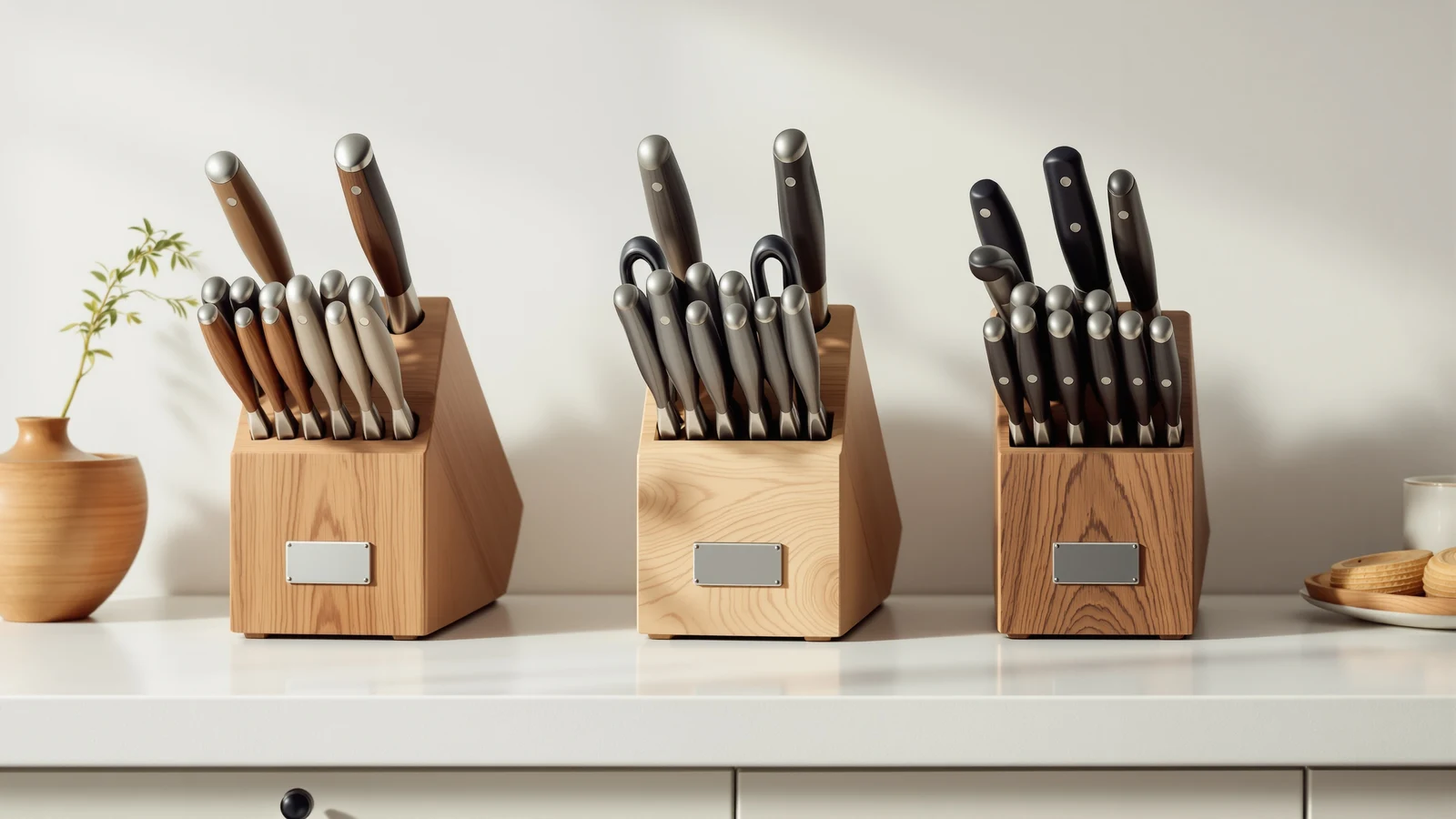
Knife Block Material: Acacia Wood, Pine and Magnetic — Does It Matter?
A block is not just a holder, it is what keeps the edge off other metal and off the knife next to it. Three materials in this catalogue, and what each one actually changes.
 Roundup
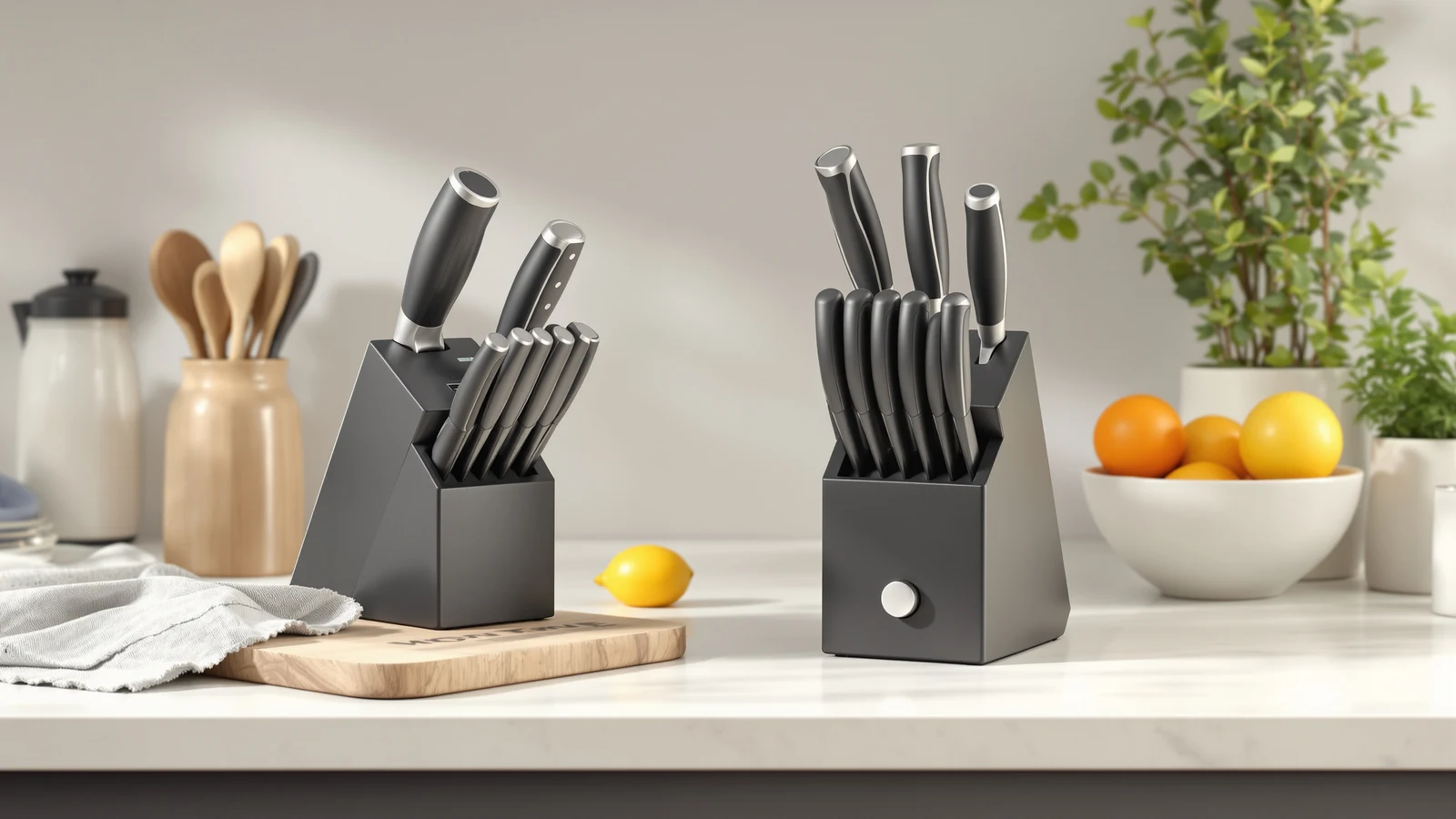
The Best Knife Sets Under $30
Below thirty dollars the block gets smaller and the steel gets thinner, but a published construction detail still separates the honest sets from the rest. Three worth the money.
 Buying guide
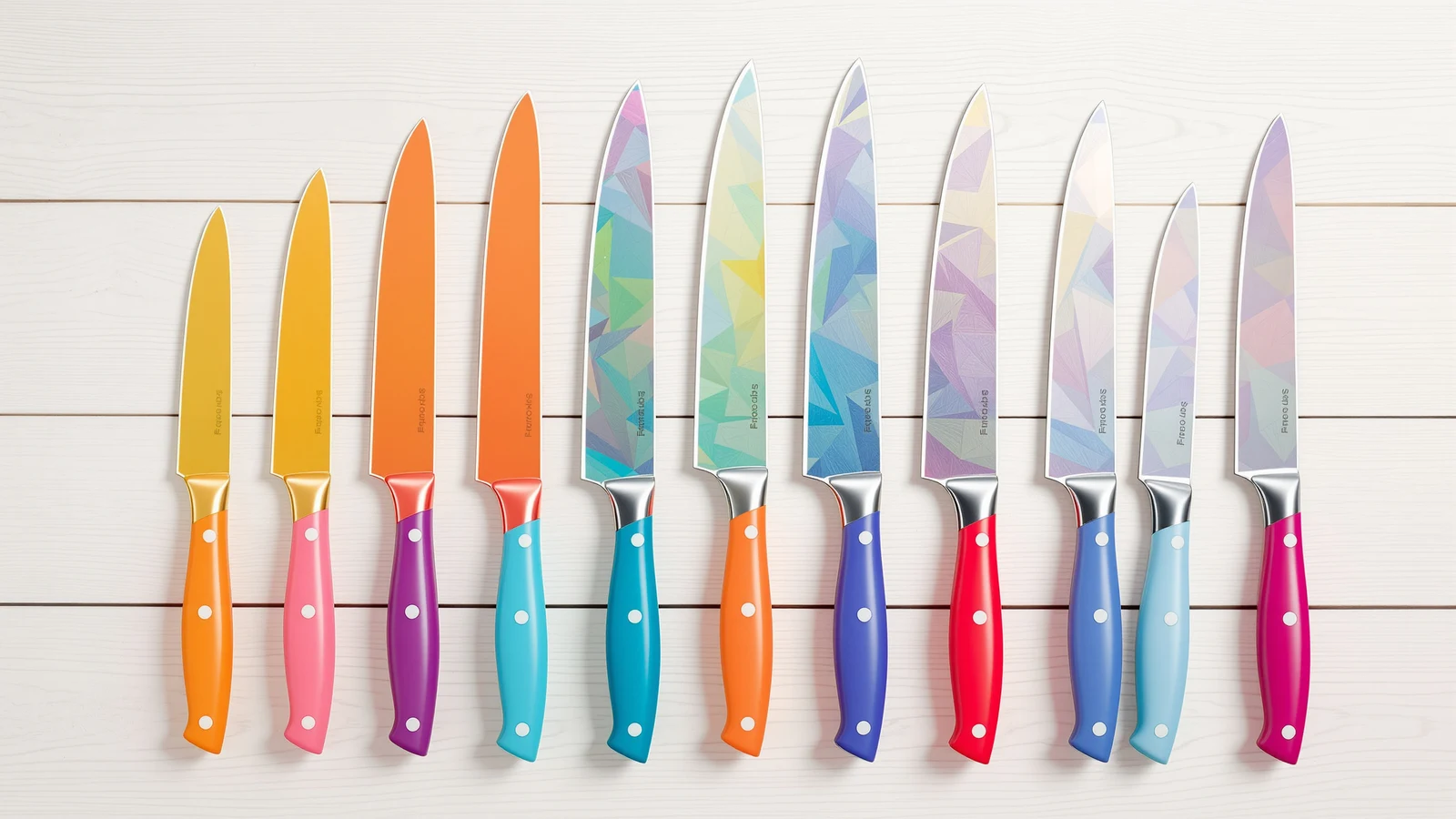
Color-Coded Knife Sets: Do They Actually Prevent Cross-Contamination?
A red handle for meat, a green one for vegetables. The system works in commercial kitchens with trained staff — whether it survives contact with one household cutting board is a different question.
 Buying guide
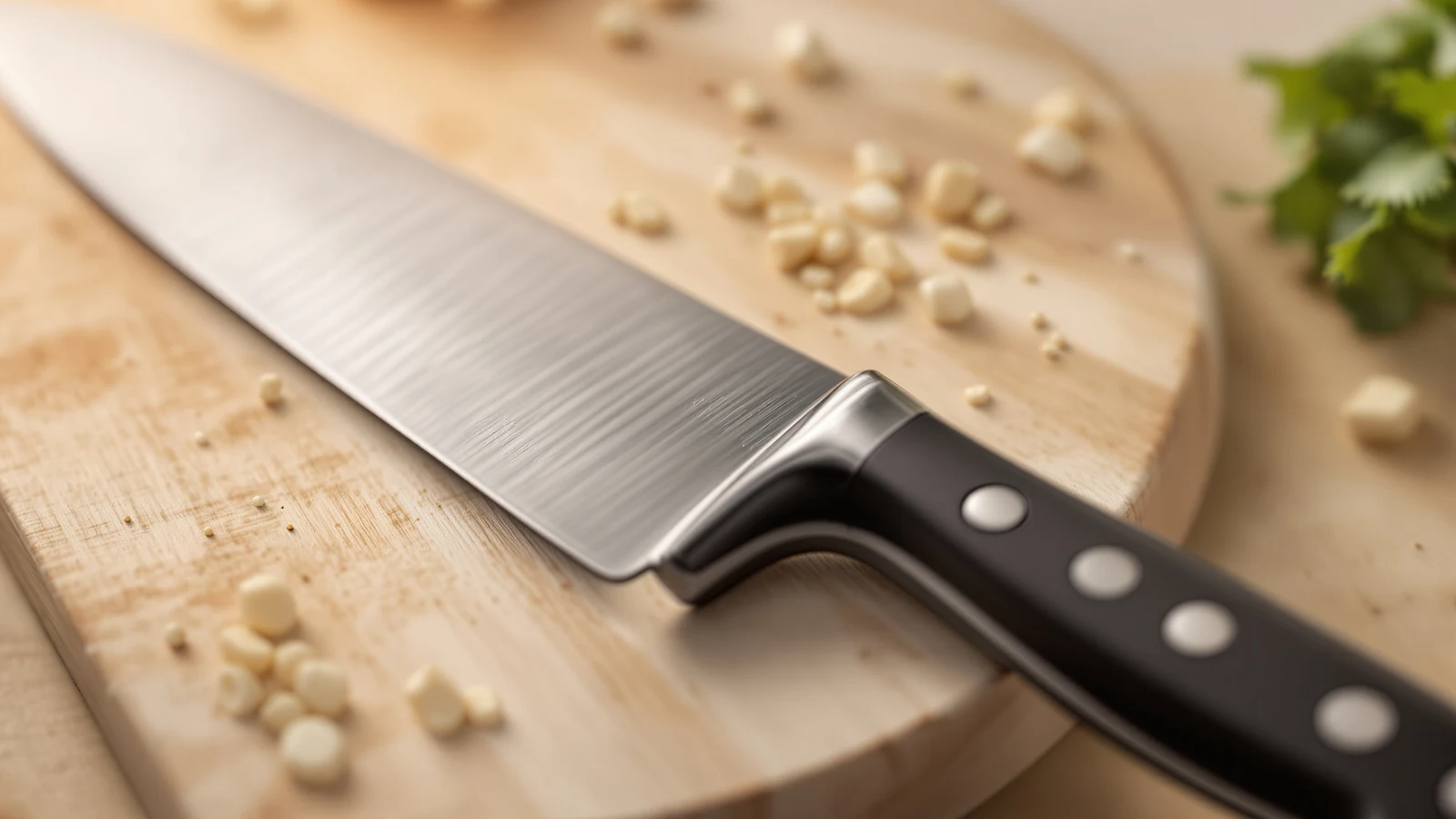
What 'Full Tang' Actually Means on a Knife Set
The metal does not stop at the blade. On a full-tang knife it runs the length of the handle, riveted through — and you can usually see it without reading a single spec.
 Buying guide
"Dishwasher Safe" Knife Sets: What the Label Actually Means
Three listings in this catalogue print the words dishwasher safe on a set of kitchen knives. The dishwasher will still dull the edge. What the label is actually protecting against.
 Roundup
The Best Splurge-Worthy Knife Sets
Above a hundred and fifty dollars the pitch changes: more steel, a sharpening mechanism built into the block, twenty pieces instead of fifteen. What actually justifies the price, and three sets that earn it.
 Buying guide
How to Choose a Kitchen Knife Set
Six questions in the order that matters. Answer them and the shortlist writes itself — and the piece count is not one of them.
 Roundup
The Best Steak Knife Sets
Six steak knives come free in most blocks and most of them are poor. When buying them separately makes sense, and what to look for.
 Buying guide
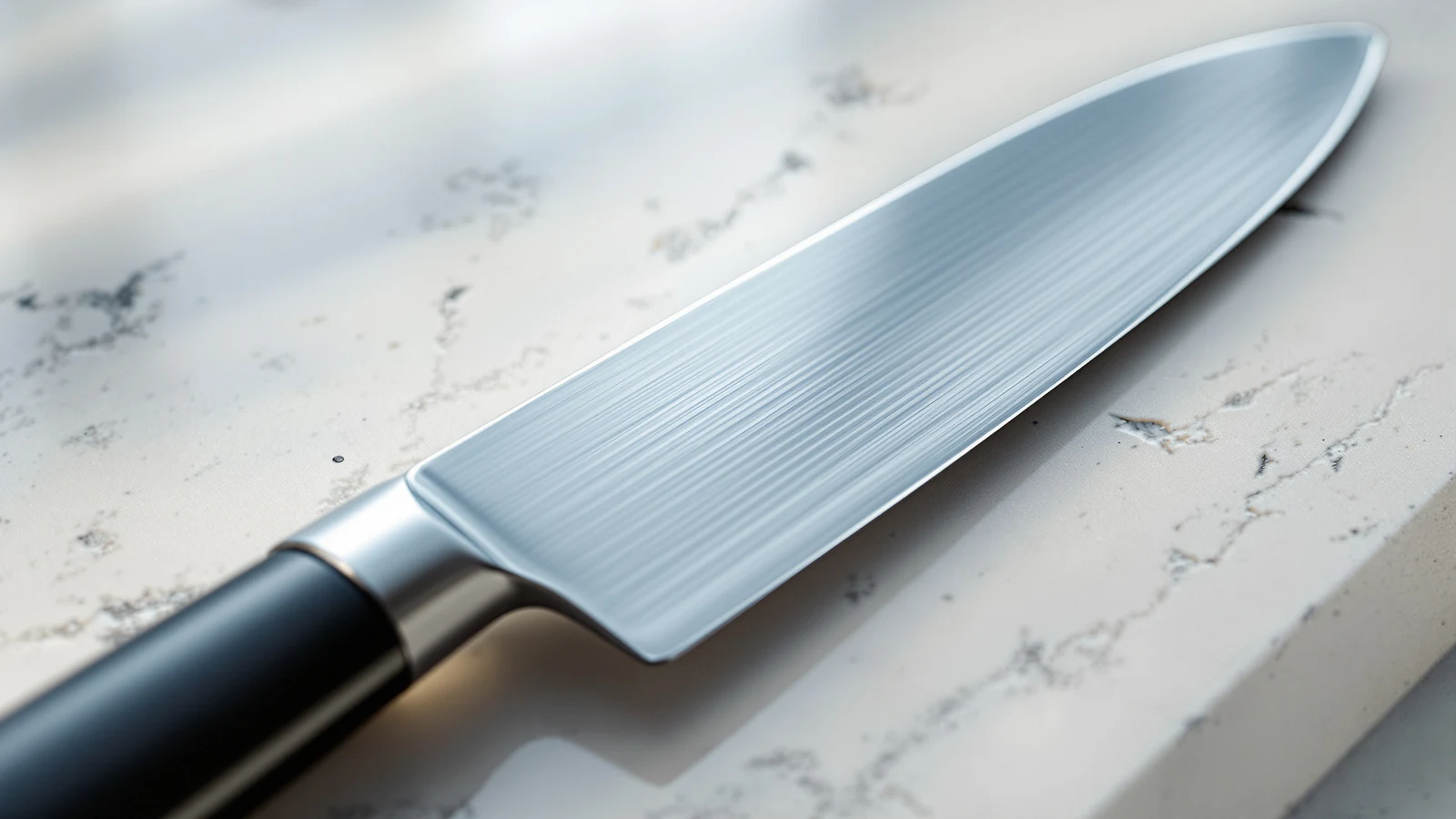
What Rockwell Hardness Tells You About a Knife
56 plus or minus 2 appears on good listings and nowhere else. What the number measures, what it trades, and why mid-fifties is the sensible place to be.
 Roundup
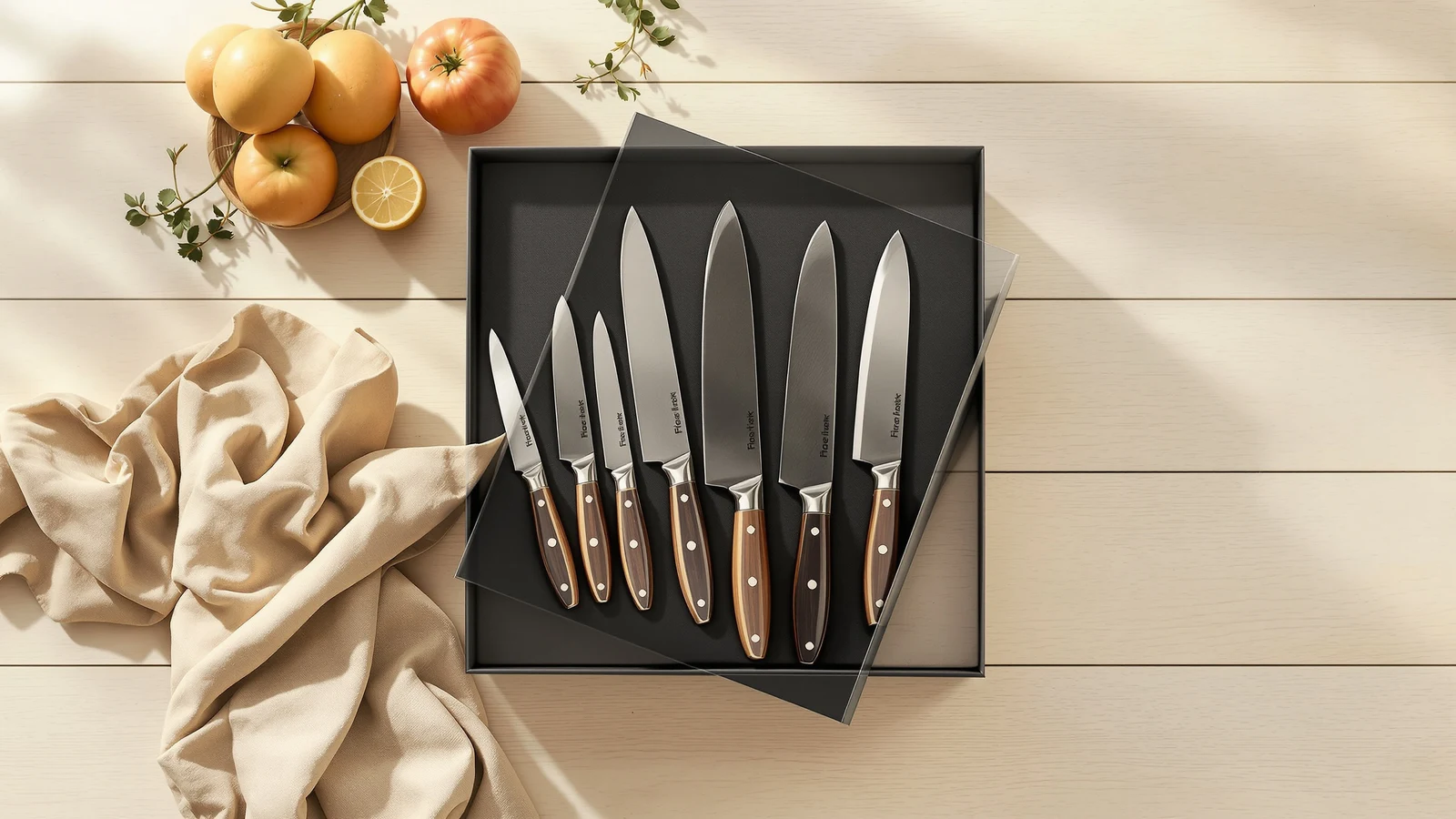
The Best Knife Sets to Give as a Gift
A knife set is a gift people keep for a decade or resent for a month. What makes one a good present, and the three that are.
 Comparison
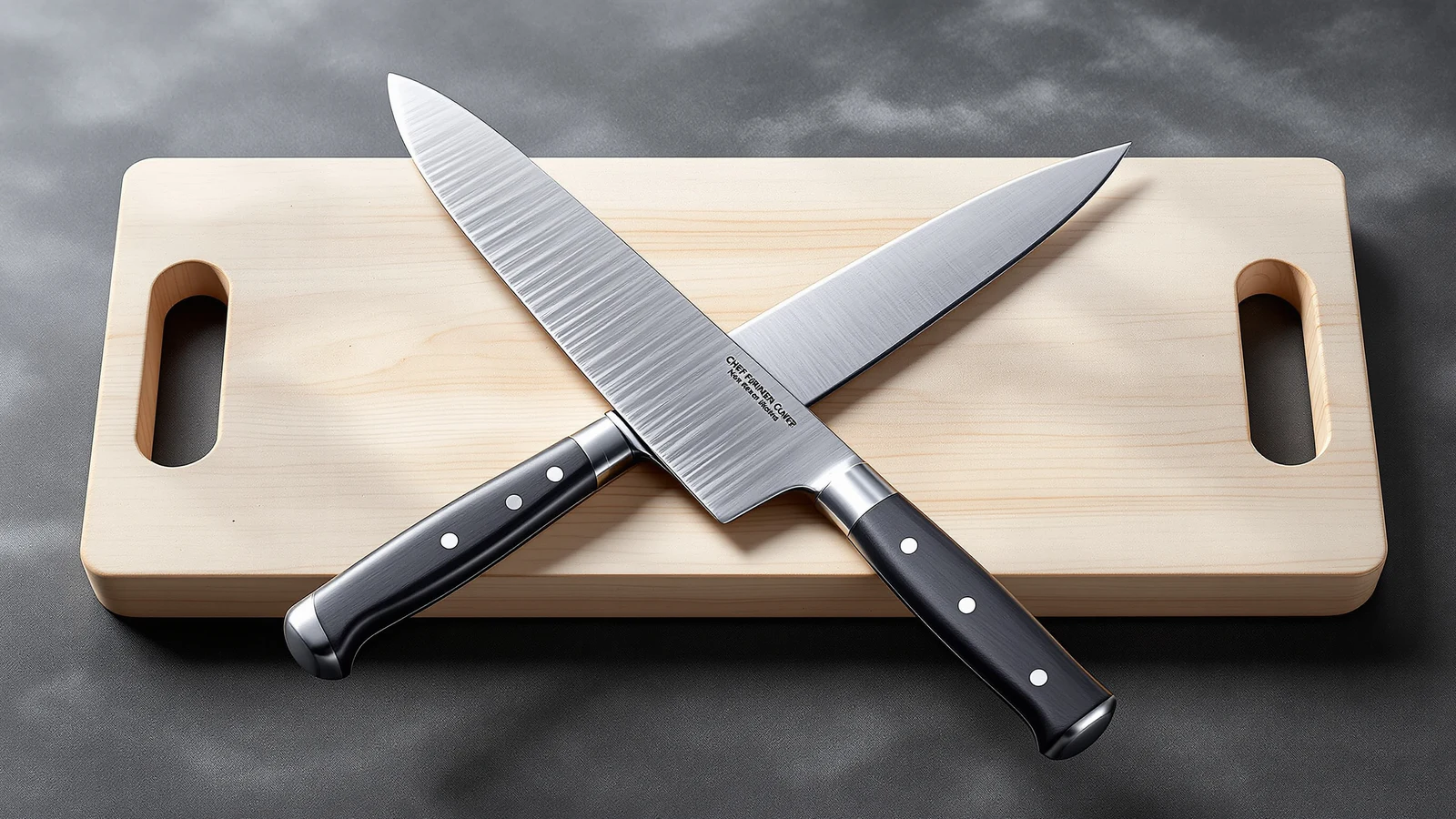
German vs Japanese Kitchen Knives
Heavier and more forgiving, or lighter and sharper. Both are right — the question is what you cook and how carefully you treat your knives.
 Roundup
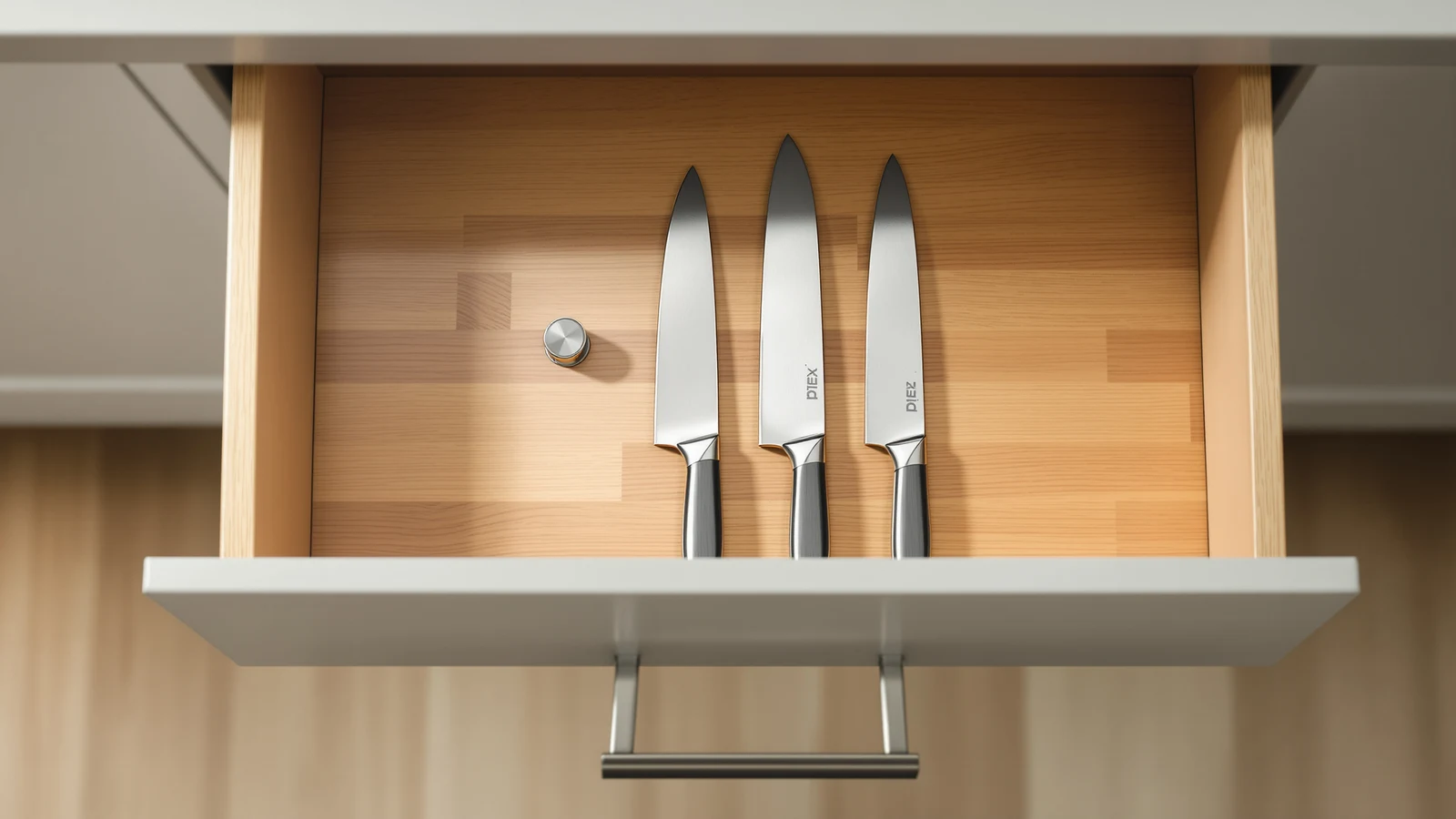
The Best Knife Sets Without a Block
A block is furniture. If your counter is short or your drawer is deep, these are the sets that give you blades instead of a box.
 Buying guide
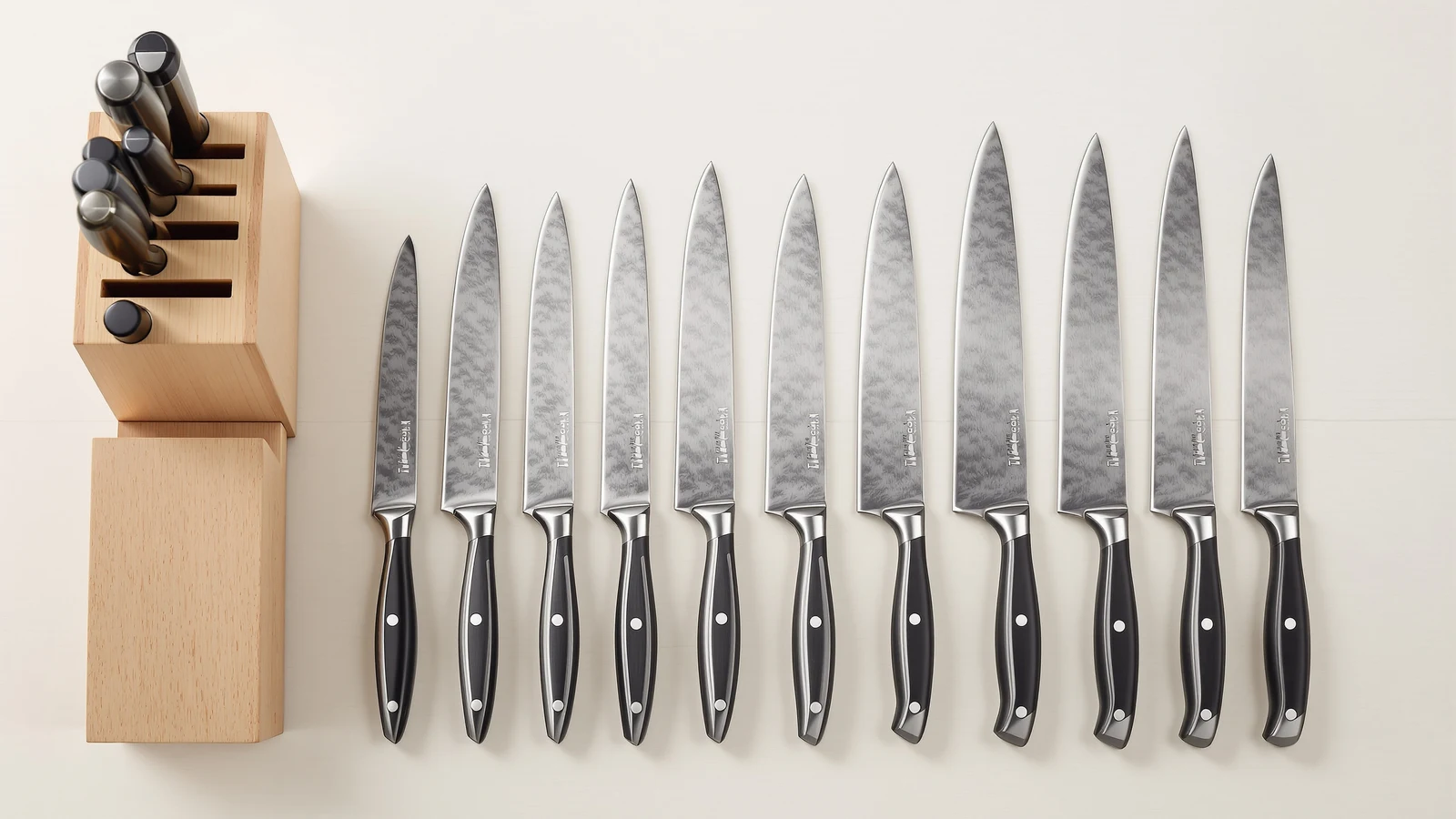
What Is Actually in a 15-Piece Knife Set?
Eight knives, six steak knives and a block — or seven knives, shears, a sharpener and a block. Two sets with the same number can be very different purchases.
 Roundup
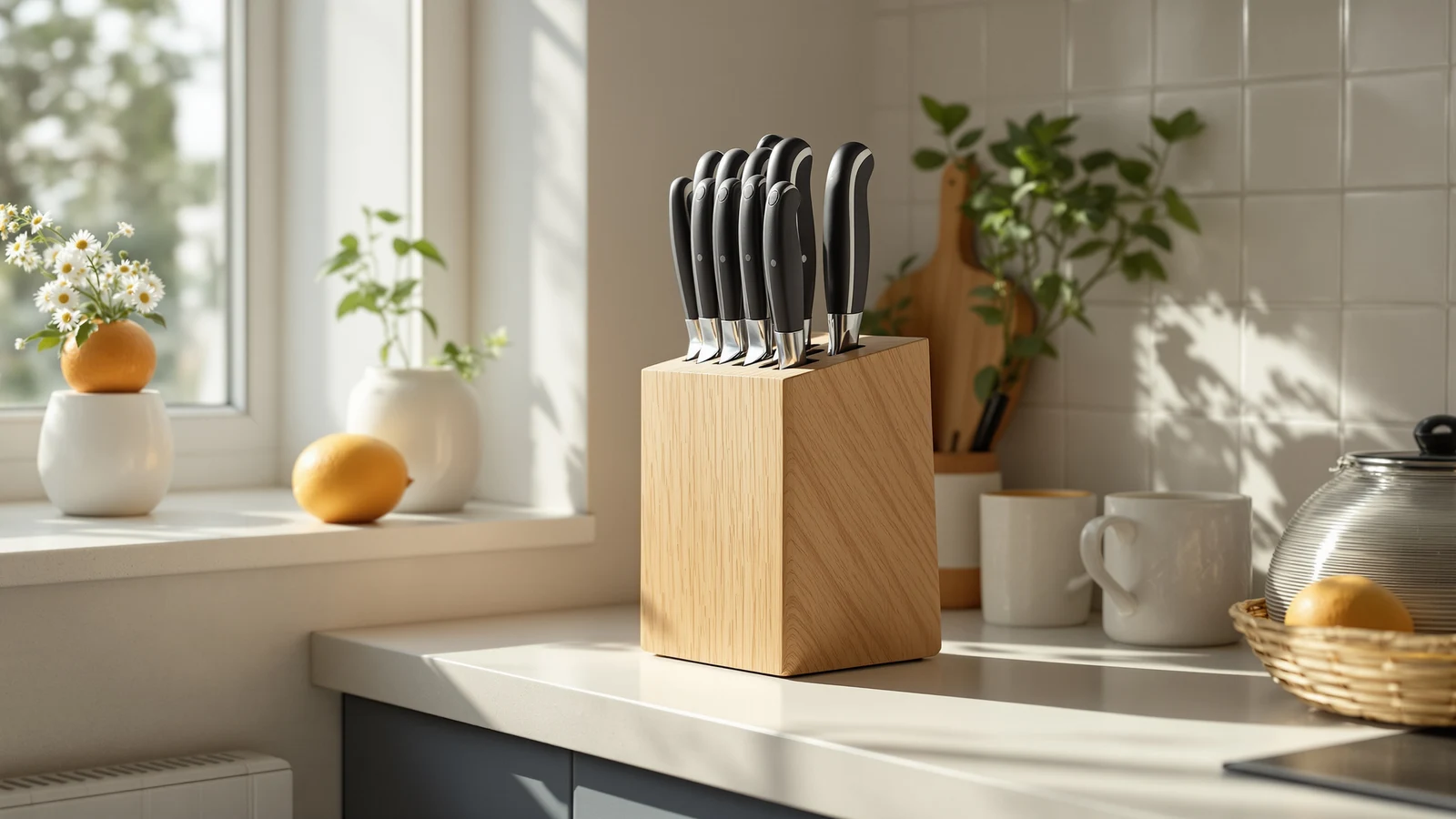
The Best Knife Sets for a First Apartment
A complete kitchen for the price of one good knife. What to accept at this price, what never to accept, and the three sets that get it right.
 How-to
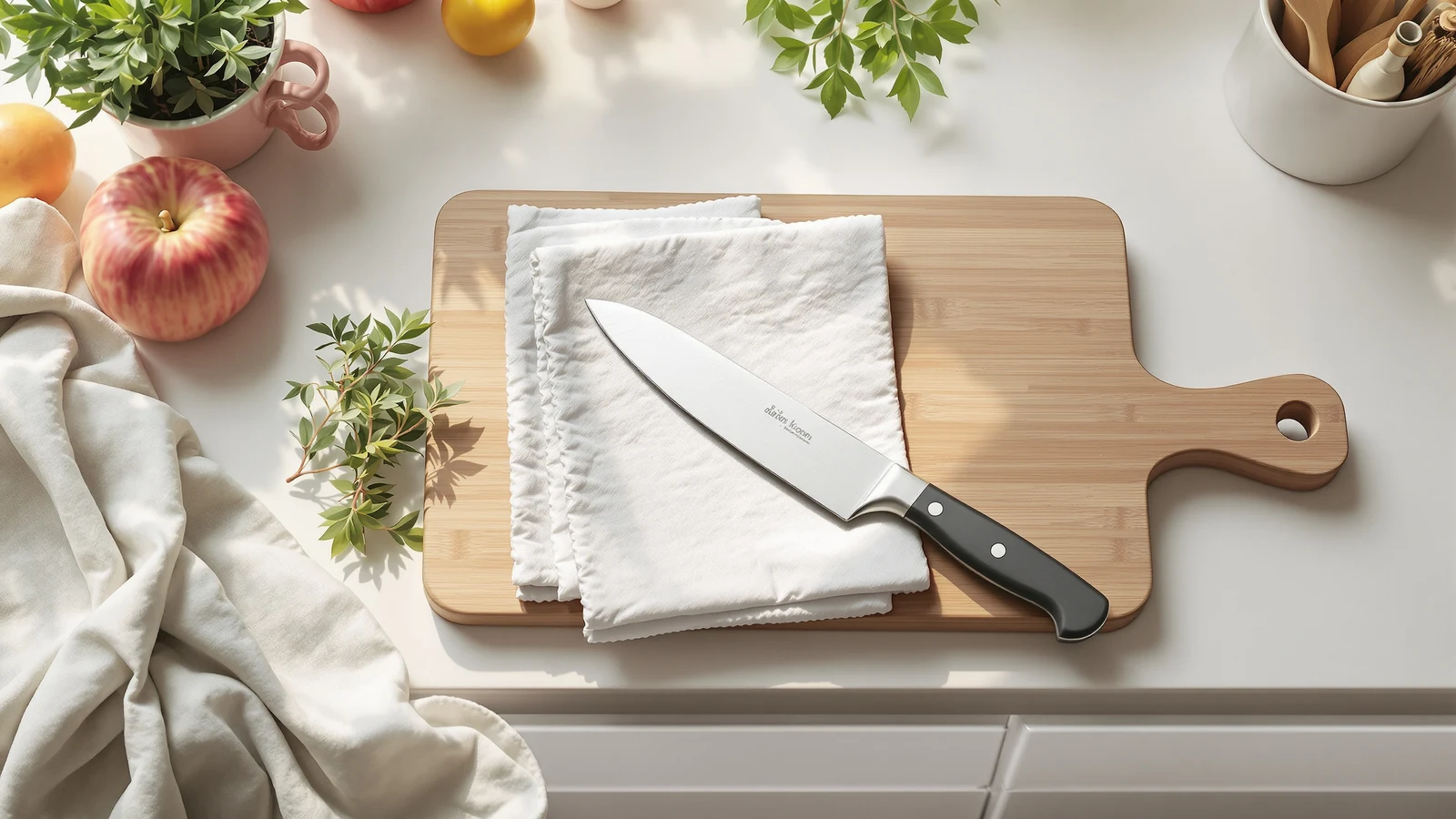
How to Keep a Knife Set Sharp for Years
Nothing here is difficult and all of it is skipped. The washing, the storing and the sharpening that separate a set that lasts from one replaced in two years.
 Buying guide
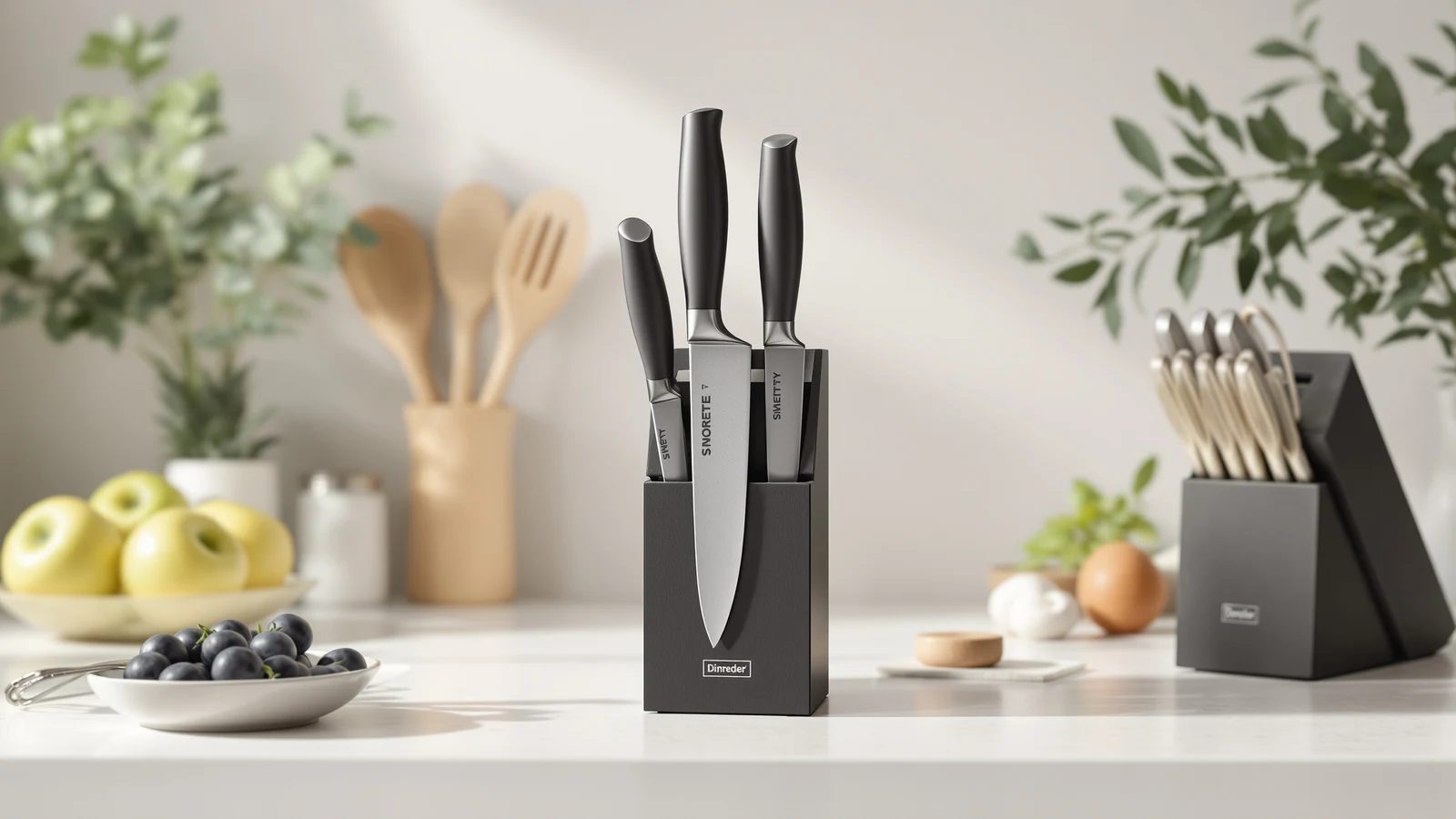
Knife Sets With a Built-In Sharpener: Worth It?
A sharpener in the block touches up the edge every time you put the knife away. Genuinely useful, and not the same as sharpening properly.
 Roundup
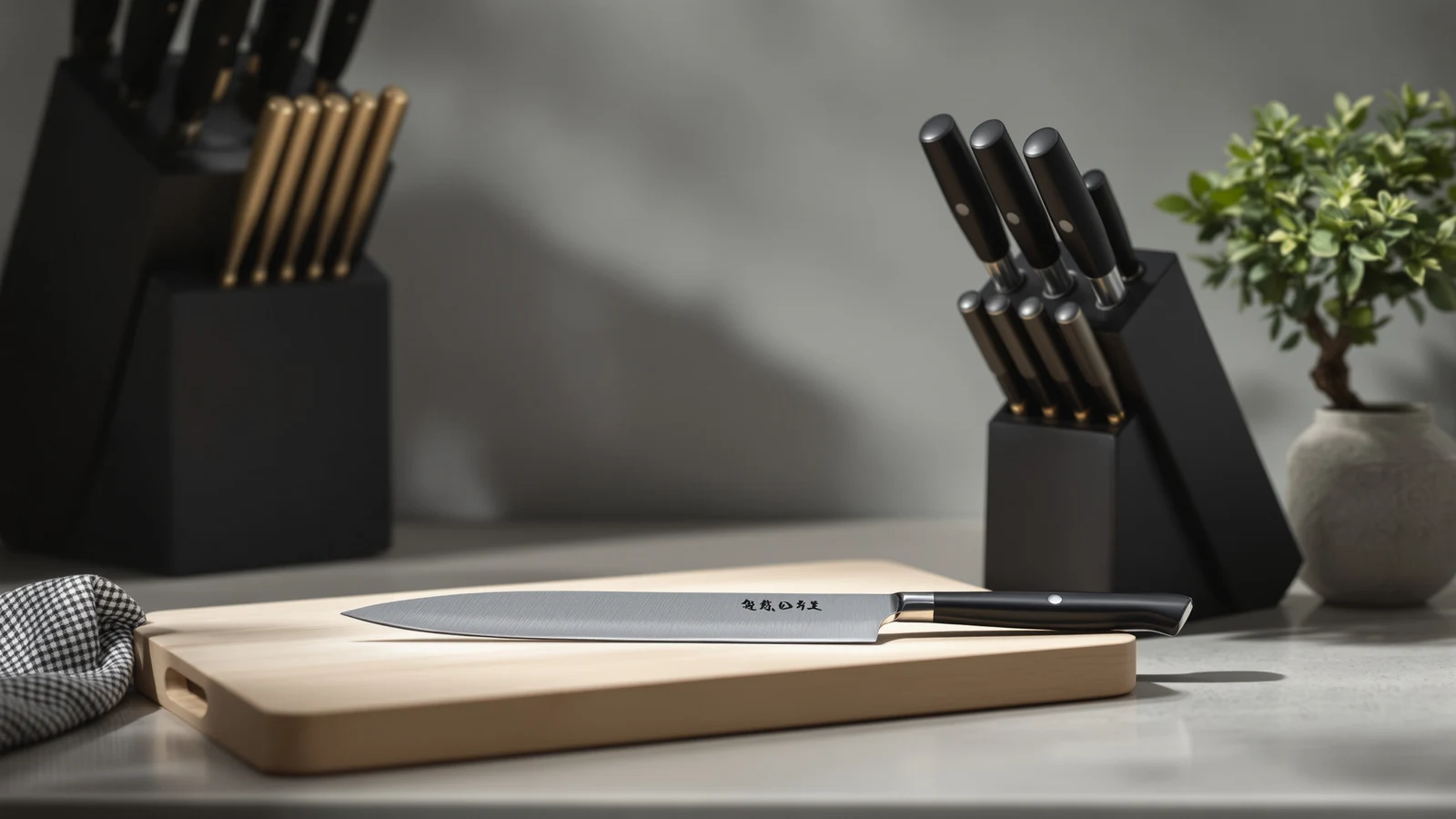
The Best Japanese-Style Knife Sets
A gyutou is ground near 15 degrees where a German knife sits around 20. That narrower edge bites more easily and forgives less. Three sets worth the attention.
 Honest take
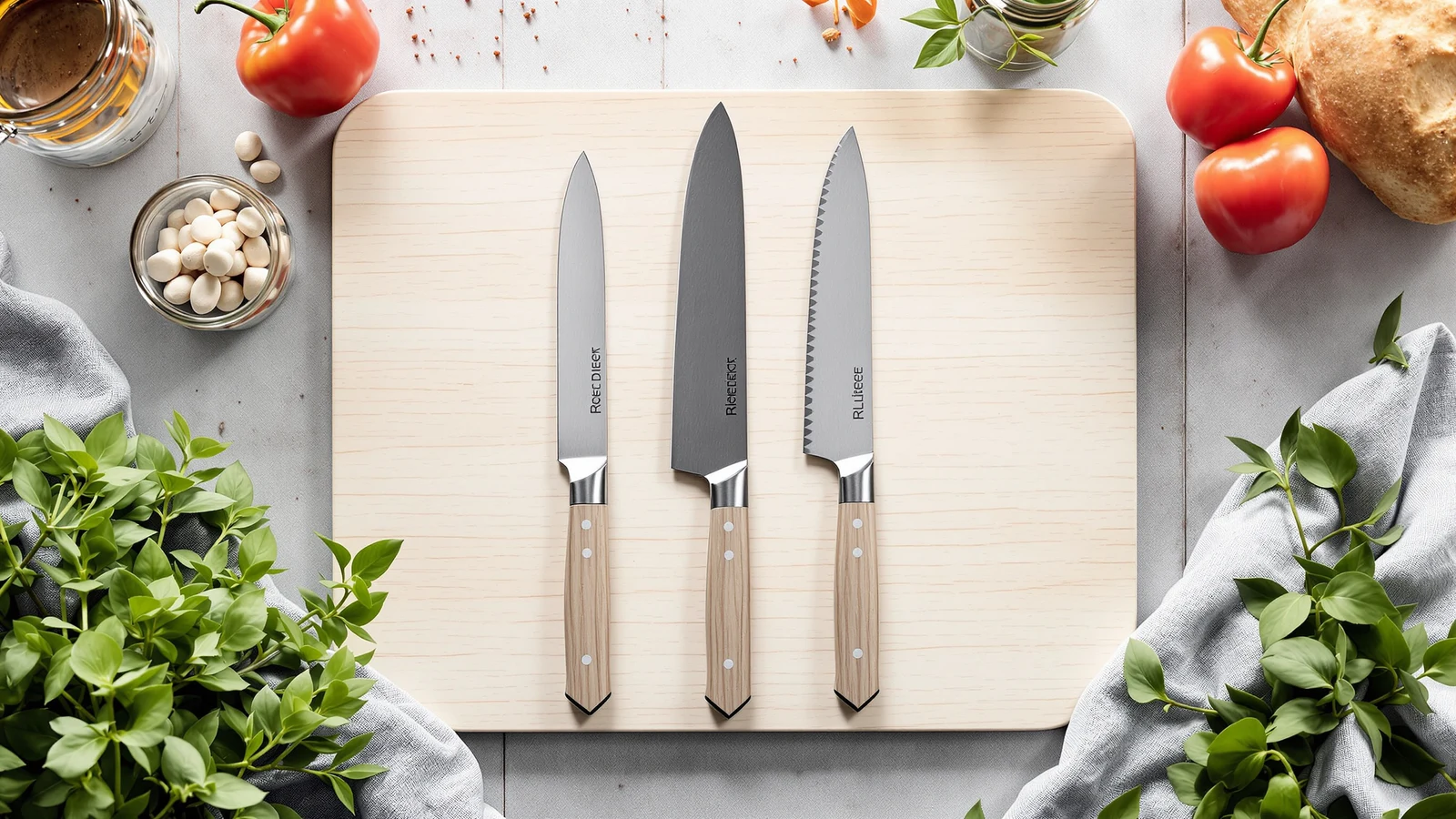
How Many Kitchen Knives Do You Actually Need?
Three, and the third is arguable. What a 15-piece block really contains, and why the piece count is the worst way to compare two sets.
 Comparison
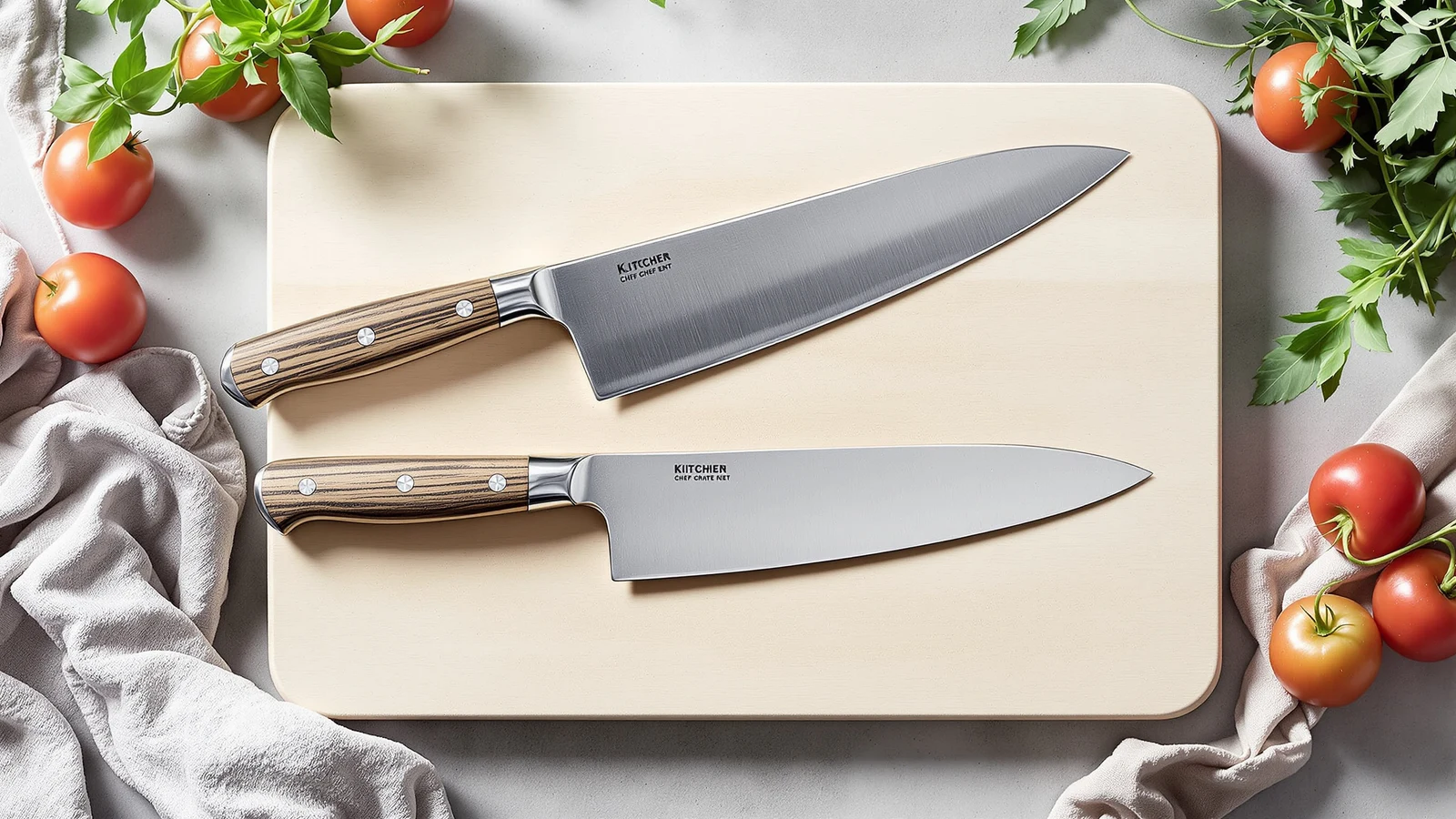
Stamped vs Forged Kitchen Knives: Which Should You Buy?
One is hammered from a bar of steel, the other cut from a sheet. The difference is in the hand, not in the edge — and the cheaper one is not worse.
 Roundup
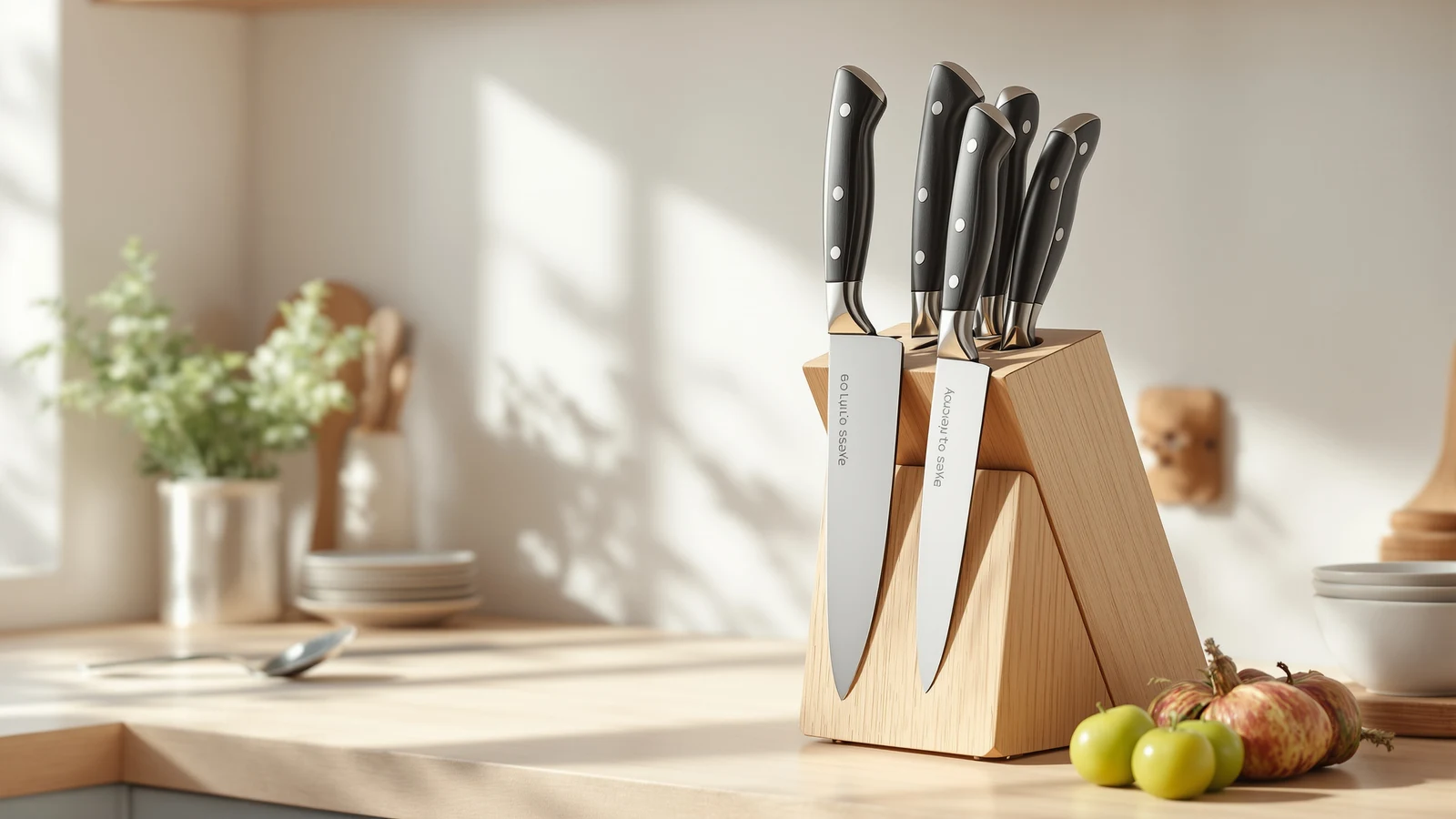
The Best Kitchen Knife Sets Under $100
Under a hundred dollars you can still get forged steel, full tang and a published contents list. Three that deliver, and the claims to ignore.
From our networkThe pot your knives are prepping for
Our sister site compares dutch ovens the same way: enameled against bare cast iron, how the lid seals, real oven-safe limits, and which size fits the way you cook.